
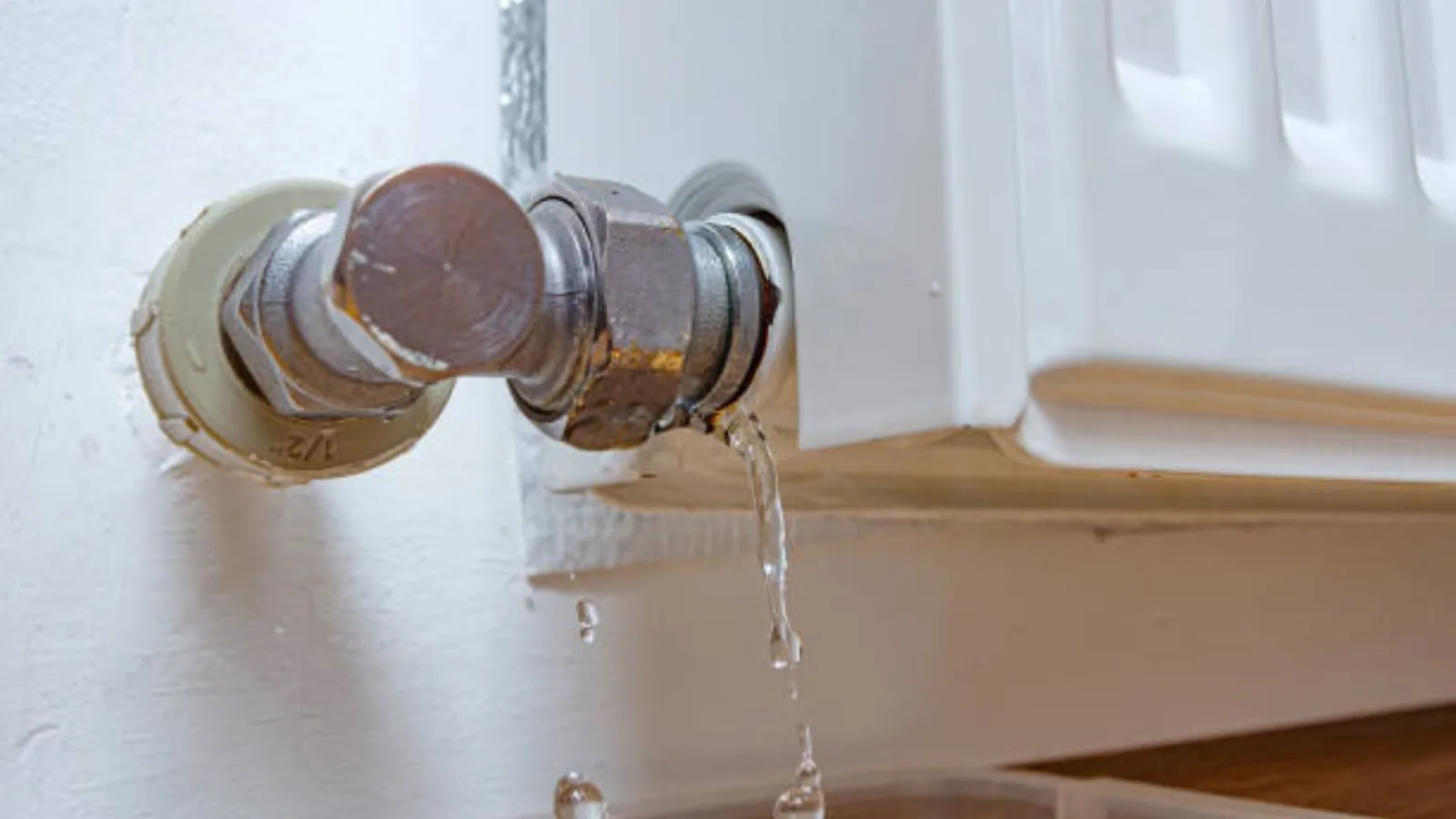
Water heater leak emergency: first steps
- Close the cold water inlet valve on the pipe above the tank. If it will not turn, close the main.
- Gas unit: turn the control knob to off. Electric unit: switch off its breaker at the panel, as long as you can reach the panel on a dry floor.
- Do not touch the water if it is steaming. Tank water is often 120 degrees or hotter.
- If you smell gas, leave the house and call the gas company from outside.
- Take photos of the tank, the data plate and the wet area.
Why location matters more than tank size
A standard residential tank holds 40 or 50 gallons. What makes the damage large or small is where that water goes. A heater on a garage slab may wet a wall plate and some stored boxes. The same heater in an interior closet soaks carpet in two rooms. A heater in an attic or on an upper floor sends the water through the ceiling below.
In Gardendale you find all of these. Basement homes, such as the full-brick basement houses local agents describe in the Magnolia Ridge area, often have the heater downstairs near finished space. Slab garden homes and newer houses tend to have it in a garage or utility closet.
Signs a tank is close to failing
- Rust-colored water at the hot taps.
- Moisture or a rust trail at the base of the tank.
- Popping or rumbling as the burner runs, a sign of sediment.
- Dampness in the drain pan, if the heater has one.
A slow weep can go on for weeks behind a closet door. By the time the carpet outside feels damp, the bottom of the surrounding drywall has usually been wet for a while.
How the cleanup is done
Standing water is extracted first. Then a moisture meter and thermal camera check the walls around the heater, the flooring beyond the closet and any ceiling below. Baseboards in the wet zone are removed so air can reach the wall plate.
Air movers and a dehumidifier run until readings are normal, usually three to five days. Drywall that wicked water for a long time, or shows mold, is cut out and replaced. The drying approach follows the ANSI/IICRC S500 standard.
Slow leak or sudden failure?
| What happened | What it usually means for cleanup |
|---|---|
| --- | --- |
| Tank split and emptied | Large area, but clean water and caught quickly |
| Relief valve discharged | Often limited to the area by the heater |
| Slow seep for weeks | Smaller area, but more hidden decay and possible mold |
| Leak from an attic unit | Ceiling and insulation involved, see ceiling repair |
What decides the price
The price turns on how far the water spread, the flooring it reached, whether a ceiling or finished basement is involved, the drying days and any drywall or flooring repair. Scope and price are explained before work starts. Replacing the heater is a plumber's job and a separate cost.
A sudden tank failure is often covered as accidental water damage. The tank itself usually is not, and a long-running seep may be treated as maintenance. Ask your insurer. For a figure on your house, call (833) 521-1033.
Water heater cleanup in Gardendale and around
We serve Gardendale 35071, Mount Olive, Fultondale, Morris and Kimberly. If the heater sits downstairs, the basement water damage page is the closer match, and soaked carpet outside a heater closet is covered under carpet water damage. Homeowners in Kimberly get the same service.