
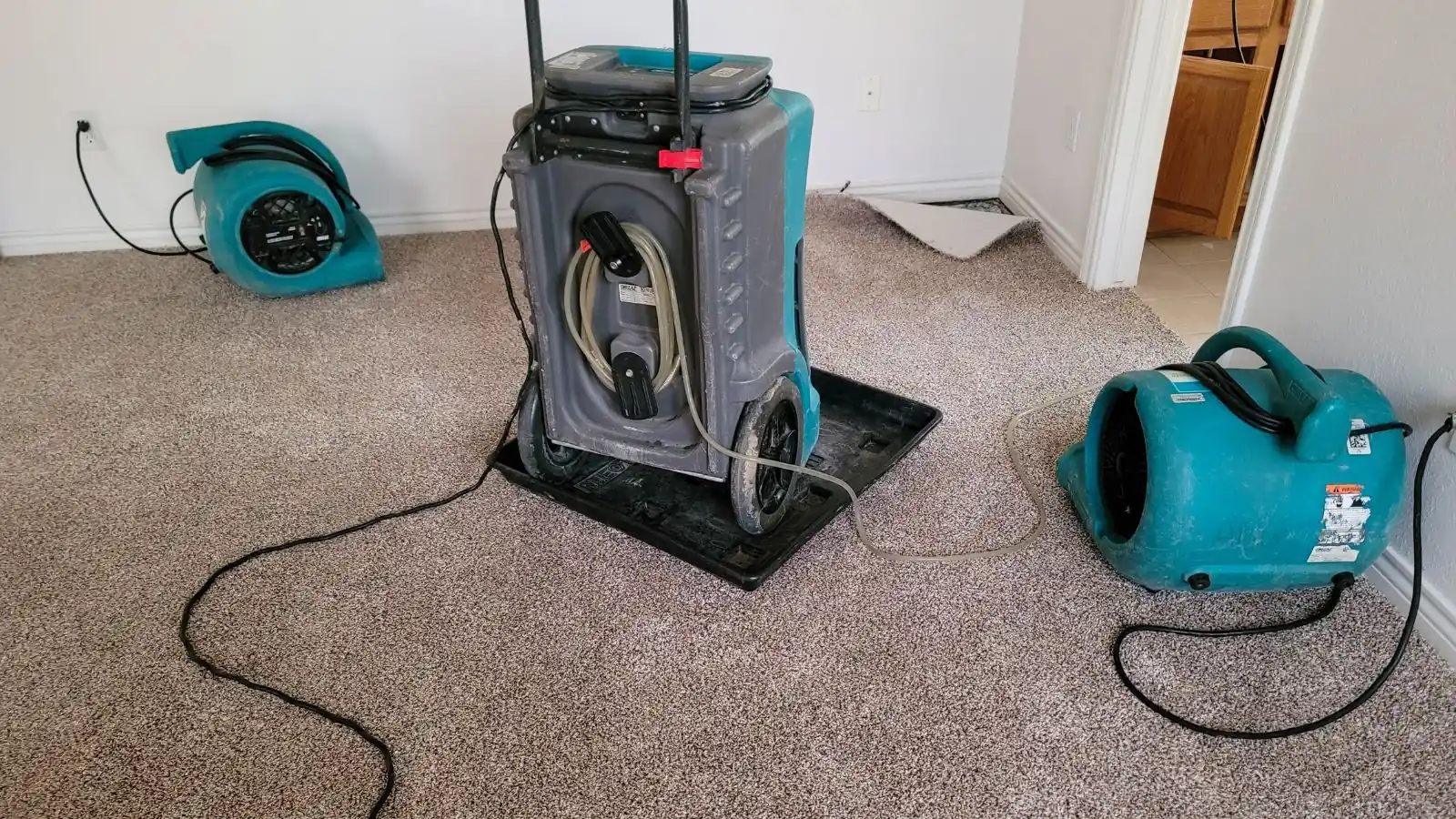
Carpet is a three-layer problem
There is the carpet, the pad beneath it and the subfloor under both. The carpet face dries quickly. The pad is foam and holds many times its weight in water. The subfloor, wood or concrete, stays wet as long as the pad sits on it. Drying the top with a fan and leaving the pad is how a closet starts to smell two weeks later.
Keep it or replace it?
Three things decide: what kind of water it was, how long the carpet was wet, and the condition of the carpet before.
| Water source | Carpet | Pad |
|---|---|---|
| --- | --- | --- |
| Clean supply water, wet under 48 hours | Usually saved | Often replaced, sometimes dried |
| Gray water such as washer or dishwasher discharge | Sometimes saved with cleaning | Replaced |
| Sewage or outside flood water | Discarded | Discarded |
| Any source, wet for several days | Usually discarded | Discarded |
Contaminated water is the firm line. Carpet that took in sewage is not cleaned and relaid. That case belongs with sewage backup cleanup.
Signs the damage goes beyond the carpet
- The tack strip along the wall is dark or rusting.
- Baseboards are swelling or pulling away.
- The carpet backing is separating from the face, called delamination.
- A sour or musty smell that returns after the surface dries.
- Staining wicks back up after cleaning.
How wet carpet is restored
- Extraction. A weighted extraction tool presses water out of carpet and pad together. On clean-water jobs this is sometimes enough to dry both in place.
- Lifting. More often the carpet is released from the tack strip and folded back, the wet pad is cut out and bagged, and the subfloor is exposed.
- Drying. Air movers dry the subfloor and both sides of the carpet while a dehumidifier pulls moisture from the room.
- Wall bases. Baseboards are checked and removed where the wall plate is wet.
- Relay. New pad is installed, the carpet is stretched back onto the strip, seams are repaired and the carpet is cleaned.
What you can do in the first hour
Blot, do not rub. Put foil or plastic under furniture legs so stain and rust do not transfer. Lift curtains and bed skirts off the floor. Keep the air conditioning running, because it removes humidity. Do not use a household vacuum on wet carpet.
One caller in the regional records found a closet carpet and pad soaked by a neighbor's sprinkler system hitting the outside wall. If the source is outside, the wall itself needs checking, which is covered under wall and drywall repair.
Carpet over slab and carpet over wood
Homes in Gardendale are built both ways. Over a concrete slab, moisture in the concrete keeps feeding the new pad if the slab is not dried first. Over a framed floor, water passes through to the crawl space or the room below, and plywood or OSB subfloor can swell. The floor under the carpet decides how long drying takes.
Mold under carpet
People in the call records describe pulling up carpet and finding mold on the pad or the tack strip. Mold needs moisture, and carpet that stayed damp provides it. Small areas are handled during the carpet work. Wider growth on drywall or subfloor is handled under mold remediation, following the ANSI/IICRC S520 standard.
What decides the price
The area of carpet, the water category, whether pad is replaced, the subfloor type, wall base damage and drying days set the cost. Scope and price are explained before work starts.
Sudden leaks are often covered by homeowners insurance and slow seepage often is not. Ask your insurer. To get a price for your rooms, call (833) 521-1033.
Carpet restoration around Gardendale
We serve Gardendale 35071 and Mount Olive, Fultondale, Morris and Kimberly. See the Kimberly page for the north side.