
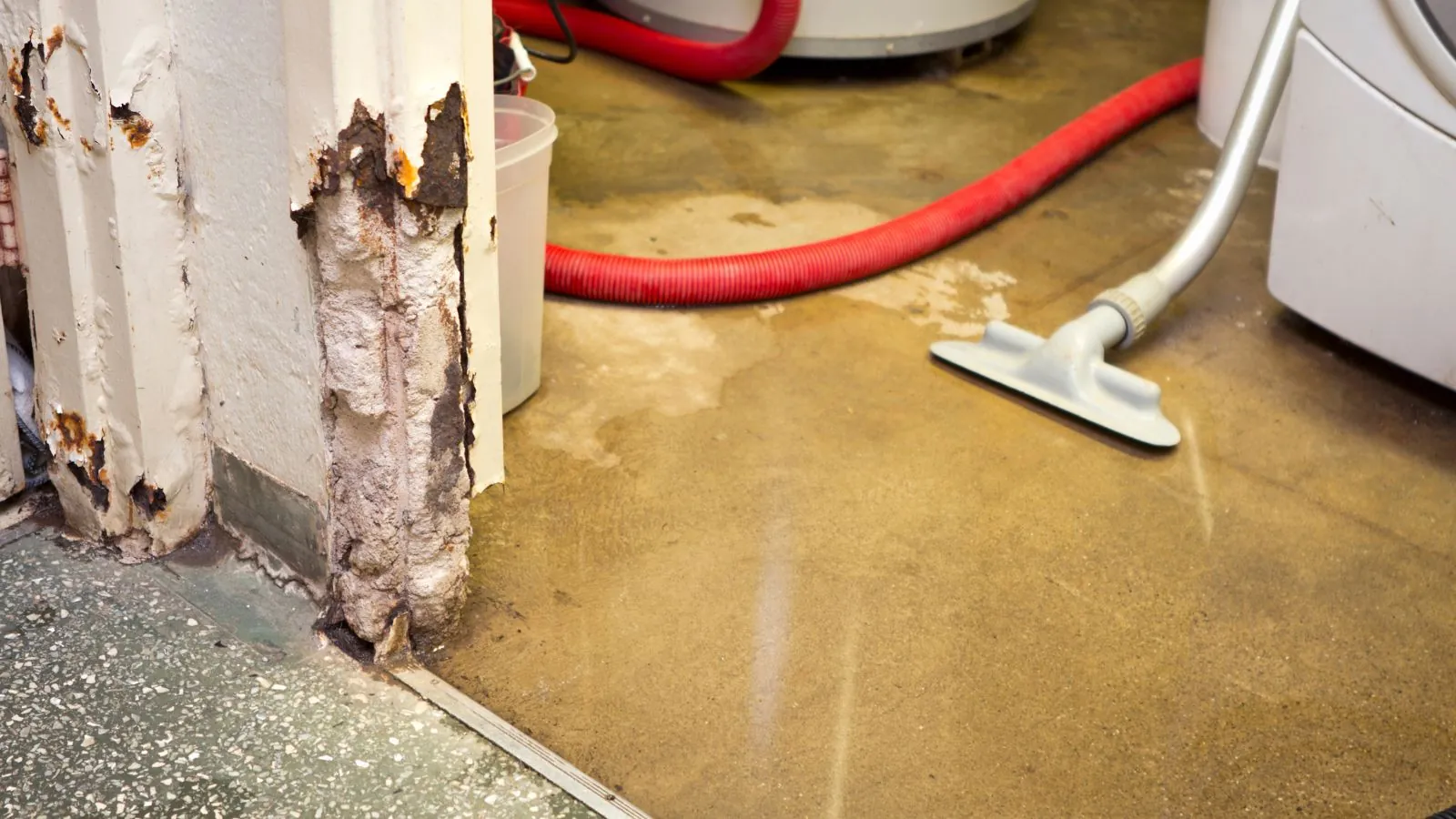
When standing water is an emergency
Any water you can see moving or pooling is urgent, because flooring, baseboards and drywall start wicking it up at once. An inch of water across a 200 square foot laundry room is roughly 125 gallons, and most of it will not evaporate on its own. It soaks down and sideways.
Callers describe it in plain words: ankle-high water in the laundry room, a kitchen floor that is one big puddle, carpet that squelches. All of those are extraction jobs first. Drying equipment set on top of standing water does very little.
Why Gardendale homes end up with standing water
Gardendale has no major river inside the city limits. The streams here drain north and west toward the Locust Fork of the Black Warrior River, so most standing water indoors starts with plumbing, an appliance or a storm rather than a river leaving its banks. That matters for extraction because the water is usually clean at the start and salvage odds are better when it is removed quickly.
The 2020 Census counted 6,854 housing units in the city, built across more than six decades of growth. Supply lines, water heaters and washing machine hoses of very different ages sit behind those walls. If the source turns out to be a failed line, the burst pipe cleanup page covers the shut-off steps in detail.
How the water comes out
- A quick safety walk: power, slip hazards and the water category (clean, gray or contaminated).
- Submersible pumps for anything deeper than about an inch, with discharge routed outside or to a drain.
- Weighted or wand extraction on carpet, pad and hard floors to pull water out of the material itself.
- Moisture meter and thermal camera readings to map how far water travelled under walls and cabinets.
- Air movers and dehumidifiers placed the same visit so drying starts as extraction ends.
Pump, extractor or shop vacuum?
| Situation | What fits | Honest limit |
|---|---|---|
| --- | --- | --- |
| A cup or two on tile | Towels and a household wet vacuum | Fine if nothing ran under the baseboard |
| Soaked carpet in one room | Truck or portable extractor with a weighted tool | Pad often has to come out if it sat long |
| An inch or more across rooms | Submersible pump, then extraction | Needs moisture mapping afterward |
| Water from a drain or sewer | Professional removal with protective gear | Not a job for household tools, see sewage backup cleanup |
What the bill depends on
Price follows the amount of water and the work it takes to move it. The main factors are the depth and square footage, the water category, the flooring type, how long the water sat and how many days of drying equipment follow. You hear the scope and the price before work starts.
Sudden and accidental water damage is often covered by a homeowners policy, while gradual leaks often are not and outside flood water usually needs separate flood coverage. Check your policy or ask your insurer. Want a real number for your rooms? Call (833) 521-1033.
One limit to know: pumping out a yard, a pool or an outdoor low spot is a different service, and we will say so on the phone.
Extraction across Gardendale and nearby towns
We take extraction calls for the 35071 ZIP code, from the Fieldstown Road shopping area to the homes off Mount Olive Road, and for Mount Olive, Fultondale, Morris and Kimberly. Homeowners south of the city can read the Fultondale page for local detail. Once the floor is dry to the touch, the hidden moisture still needs structural drying, and a room that flooded from outside belongs with flood damage cleanup.
Safety steps before extraction starts
- Do not enter standing water while the power to that area is on.
- Treat water from a drain, a toilet or outdoors as contaminated and keep children and pets out.
- Wet tile and vinyl are slick. Walk slowly and wear shoes with grip.
Extraction and the drying that follows are carried out to the ANSI/IICRC S500 standard for water damage restoration.