
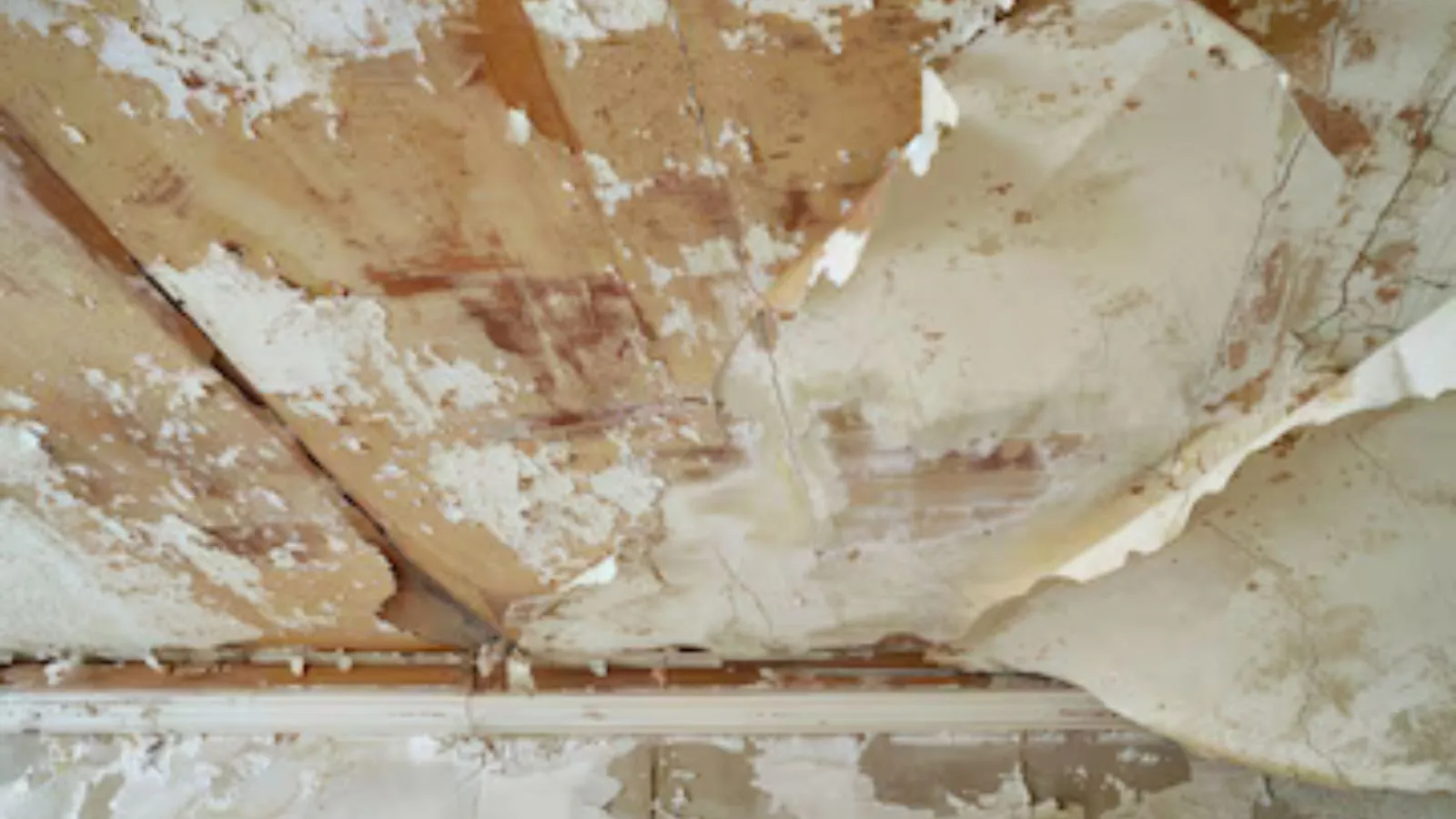
How drywall behaves when wet
Drywall is gypsum pressed between two sheets of paper. Stand it in water and it wicks upward, sometimes a foot or more above the water line. The paper face is also what mold feeds on. Drywall that got wet once with clean water and dried quickly usually keeps its strength. Drywall that stayed wet goes soft, sags and crumbles.
Behind the drywall sit the insulation and the wall plate. Fiberglass batts hold water against the back of the board, and the bottom plate is where water pools. That hidden space is the reason a wall is tested and not just looked at.
Signs callers describe
- A wet spot or soft spot that gives when pressed.
- A hole starting to form where the board has broken down.
- Bubbling or peeling paint, or wallpaper lifting.
- Baseboards swelling, staining or pulling off the wall.
- A stain on a garage wall that backs onto a bathroom or laundry.
- A musty smell from an outlet or along the floor.
Where the water came from
A wall gets wet from a pipe inside it, a fixture on the other side, a roof or window leak running down the framing, or a siding leak from outdoors. The source is fixed by a plumber, roofer or siding contractor. The stain above the wall is covered on the ceiling water damage page, and a pressurized break on the burst pipe page.
How a wet wall is assessed and dried
- A moisture meter finds the edge of the wet area, and a thermal imaging camera shows the pattern inside the wall.
- Baseboards are removed. For clean water caught early, small holes behind the baseboard line let dry air be pushed into the cavity.
- If insulation is wet, or the water was dirty, the drywall is cut out, usually in a straight band along the bottom called a flood cut.
- Air movers and a dehumidifier dry the studs and plates. Wood framing is ready to close at about 15 percent moisture content or below.
- New insulation and drywall go in, joints are taped and finished, the texture is matched and the wall is primed and painted.
Dry it, cut it or replace it
| Condition | Usual approach |
|---|---|
| --- | --- |
| Clean water, wet under two days, board still firm | Dry in place through the base of the wall |
| Wet insulation in the cavity | Cut out the wet band, replace insulation |
| Board soft, sagging or crumbling | Replace the affected sheets |
| Gray or contaminated water | Remove everything the water touched |
| Visible mold on the paper | Contain and remove under mold remediation |
Plaster walls and garage walls
Some older Gardendale homes have plaster or thick textured walls, which dry more slowly and are patched with different methods than drywall. Garage walls are often fire-rated board on the house side and must be replaced with the same type. We note these on the scope so the repair matches what was there.
Permits and repairs
Small drywall repairs after a leak do not usually raise permit questions. Larger rebuilds can. The City of Gardendale Inspection Services Department lists permits for renovations and some types of repairs, so ask the department if your repair includes electrical, plumbing or structural work.
What decides the price
The length of wall affected, whether it is dried in place or cut out, insulation, the texture and paint match, trim replacement and drying days make up the price. Scope and price are explained before work starts.
Insurers often cover wall damage from a sudden leak and often decline damage from a long-running one. Check your policy. For a price on your wall, call (833) 521-1033.
Wall repair in Gardendale and nearby
We serve Gardendale 35071, Mount Olive, Fultondale, Morris and Kimberly, including Fultondale to the south. The drying equipment is explained under structural drying.
Safety steps around a wet wall
- Do not use outlets or switches on a wet wall. Turn that circuit off at the panel.
- Do not cut into a wall without knowing where wires and pipes run.
- Homes built before 1978 may have lead paint. Do not dry-sand old painted surfaces.
Wall cavity drying follows the ANSI/IICRC S500 standard for water damage restoration.