
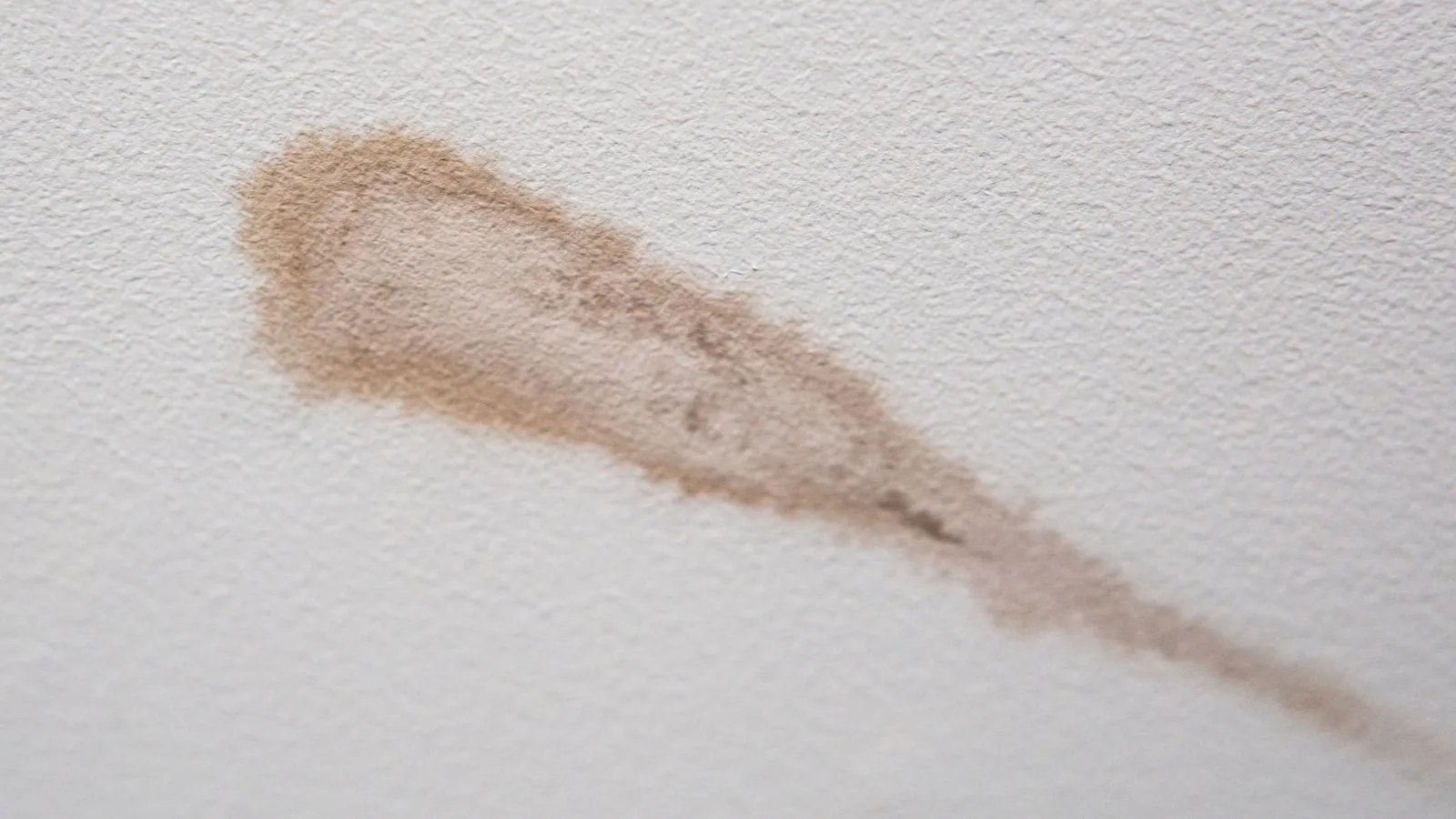
When a ceiling leak is an emergency
A stain that has been the same size for a year is a repair. A stain that is growing, dripping or bulging is urgent. Half-inch drywall holds its shape until it is saturated, then it lets go in a sheet. Wet insulation above it adds weight.
Signs that it cannot wait: a soft or bowed area, water coming through a light fixture or vent, paint blistering into a water-filled bubble, or a new brown ring after every rain.
What is above the ceiling decides the cause
- Upstairs bathroom. A toilet supply line, a wax ring or a shower pan leaking into the floor above.
- Attic plumbing or HVAC. A supply line, or the air handler drain pan overflowing. The AC leak page covers that source.
- A closet ceiling. Often the first place a slow roof or pipe leak shows, because nobody looks up there.
- The roof. Covered in its own section below.
Roof leak water damage on the ceiling
A roof leak rarely drips straight down. Water runs along the decking and rafters, soaks the attic insulation and shows up on the ceiling several feet from the hole. That is why the stain in the hallway can come from flashing around a vent on the other side of the ridge.
Our part is the water damage: tracing the wet path, removing soaked insulation, drying the framing and repairing the ceiling. A roofer fixes the roof. In Gardendale the city Inspection Services Department notes that replacing or making significant repairs to a roof usually requires a permit, so ask your roofer who is pulling it.
After a wind or hail event, damage through the roof or siding is handled under storm water damage. In every case, the leak has to be stopped before the ceiling is closed up, or the new drywall stains again.
How a wet ceiling is assessed and dried
A moisture meter and thermal imaging camera show the real wet area, which is usually larger than the stain. If the drywall is saturated or sagging, that section is cut out so the cavity can dry. If it is only damp, small holes or a removed strip can be enough to push dry air through.
Air movers and a dehumidifier then run until the joists and remaining drywall read dry. Only after that is the ceiling patched, textured to match and painted.
Patch, section or full ceiling?
| Condition | Typical repair |
|---|---|
| --- | --- |
| Dry stain, drywall firm, leak fixed | Stain-blocking primer and paint |
| Soft or sagging area up to a few feet | Cut out and replace the section, blend the texture |
| Large area or wet insulation throughout | Remove the affected ceiling, dry, re-insulate, rehang |
| Ceiling already fell | Cleanup, drying of the room below, full repair |
What decides the price
The size of the wet area, how much insulation is soaked, ceiling height and texture, the number of drying days and whether the room below was damaged all count. Scope and price are explained before work starts.
Insurers often cover sudden leaks and often decline slow ones that went on for months. Check your policy and keep photos of the stain as it changed. For your own ceiling, call (833) 521-1033.
Ceiling repair in Gardendale, Mount Olive, Fultondale, Morris and Kimberly
We work across Gardendale 35071 and the neighboring towns, including Morris to the northeast. If water followed the framing down into a wall, the wall and drywall repair page covers that part, and the equipment used above your ceiling is explained under structural drying.
Safety steps under a wet ceiling
- Do not stand or sleep under a ceiling that is sagging or dripping heavily.
- Do not touch a light fixture or ceiling fan that has water in or near it. Switch its circuit off at a dry panel.
- Wet insulation is heavy. Leave attic removal to a crew with fall protection and lighting.
Drying of the cavity follows the ANSI/IICRC S500 standard, which you can ask any company about.