
The floor feels dry, so why does it still smell damp?
Because surfaces dry first and fool you. Carpet fibers, the face of the drywall and the top of a plank can feel dry in a day while the pad, the wall cavity and the subfloor are still wet. Callers put it as wanting it properly dried out, or asking how long it takes for things to be dried up. The trade name for the answer is structural drying.
Water mitigation in plain terms
Mitigation means limiting the damage after water gets in. It has three parts: stop the source, remove the liquid water, then dry the structure before secondary damage sets in. The U.S. EPA advises drying wet materials in 24 to 48 hours to help prevent mold growth, which is why the equipment goes in on the first visit.
The equipment and what each piece does
| Equipment | Job |
|---|---|
| --- | --- |
| Moisture meter | Measures water content in wood, drywall and concrete |
| Thermal imaging camera | Shows cooler, wet areas behind surfaces without cutting |
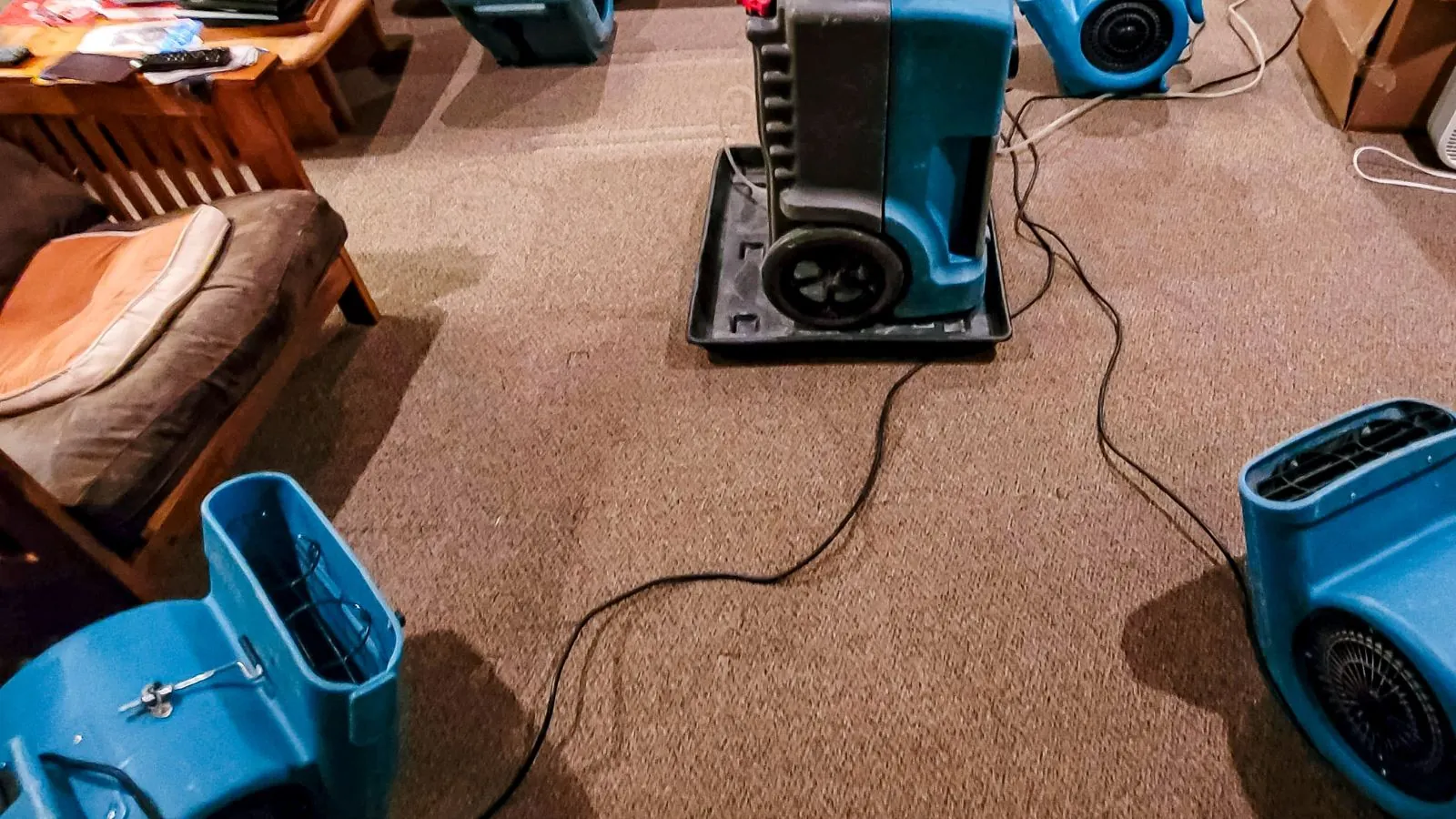
| Air mover | Pushes fast air across wet surfaces to lift moisture out |
| LGR dehumidifier | Pulls that moisture out of the air and drains it away |
| Desiccant dehumidifier | Used for dense materials and cool spaces |
| Injection or floor mat system | Directs dry air into wall cavities or under wood floors |
Air movers without a dehumidifier only move damp air around. The two work as a pair.
Moisture mapping
Before equipment is set, the wet area is mapped. Readings are taken on affected materials and on the same materials in a dry part of the house, which gives a dry standard to aim for. The map is updated on each visit. Drying is finished when the wet materials match the dry standard, and you can ask to see the readings.
How long drying takes
Most clean-water jobs dry in three to five days. Plaster, hardwood, concrete and multi-layer floors take longer. Weather matters too. Gardendale summers are humid, so windows stay shut during drying and the dehumidifier does the work that open windows cannot.
Equipment is loud and runs around the clock. Turning it off at night stretches the job and can let mold start, so we ask that it stay on.
Dry in place or remove?
Drying in place saves time and repair cost when the water was clean and caught early. Removal is the right call when insulation is soaked, when materials were wet for days, or when the water was contaminated. A wall with wet insulation is covered under wall and drywall repair, and wood floors have their own approach on the hardwood floor page.
What decides the price
Drying is priced by the equipment needed and the days it runs, which follow from the water category, the affected area, the materials and how long they were wet. Monitoring visits are part of it. Scope and price are explained before work starts.
For insurance, moisture readings and photos document the loss well. Sudden and accidental damage is often covered and gradual leaks often are not, so check your policy. For a quote on your home, call (833) 521-1033.
Drying service in Gardendale and nearby towns
We set equipment across Gardendale 35071 and in Mount Olive, Fultondale, Morris and Kimberly. See the Kimberly page for the north end of the service area. If water is still standing, start with water extraction.
Safety steps while equipment runs
- Do not use extension cords of your own on drying equipment or move units across standing water.
- Keep children and pets away from air mover intakes and cords.
- Leave the breaker plan as the technician set it. Each machine draws real current.