
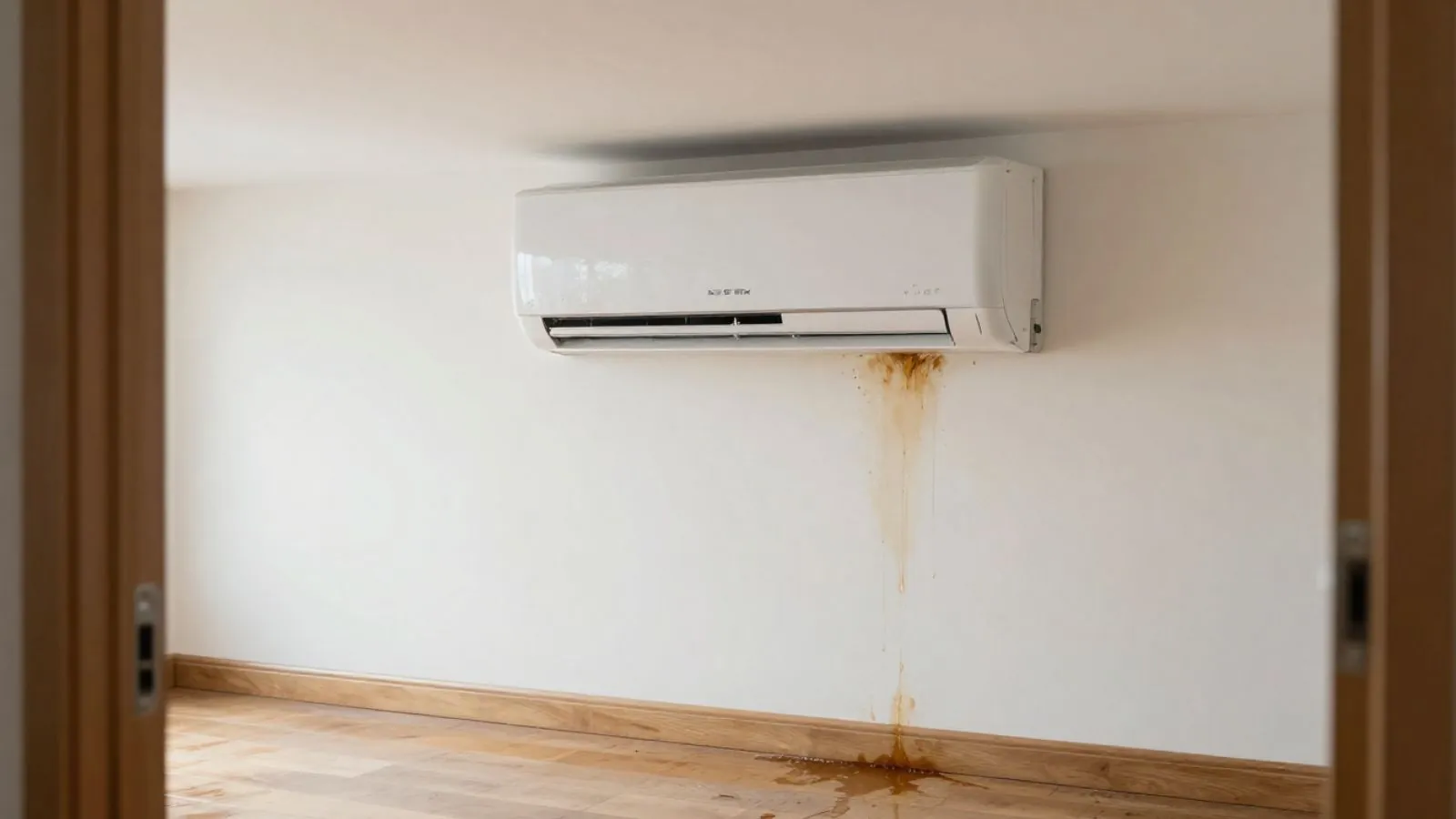
How an air conditioner floods a house
Cooling pulls moisture out of indoor air. A residential system can produce several gallons of condensate on a humid day, and all of it is supposed to leave through a small drain line. Algae and dust clog that line. Water then fills the drain pan, and if the float switch is missing or stuck, it spills.
Central Alabama summers are long and humid, so systems in Gardendale run for months at a stretch. That steady output is why a blocked line here causes real damage instead of a few drips.
Signs callers describe
- A brown ring on the ceiling below the attic air handler.
- Wet carpet or a musty smell in the closet next to the unit.
- Hardwood boards cupping in the hall near the return air grille.
- Water dripping from a ceiling vent when the system runs.
- The AC shutting itself off, which can mean the float switch tripped.
One pattern comes up again and again in call records across the region: a condensation line backs up, nobody notices, and the first sign is cupped wood flooring or mold in a closet.
What we do, and what an HVAC technician does
An HVAC technician clears the drain line, repairs the pan and gets the system running. We handle what the water did to the building. If you are not sure which you need, switch the system off at the thermostat and call. We will tell you plainly.
- Moisture mapping with a meter and thermal camera around the unit, the ceiling below and adjoining walls.
- Removal of soaked attic insulation or wet carpet pad.
- Drying with air movers and a dehumidifier until readings are normal.
- Repair of drywall, ceiling texture, baseboards or flooring.
Is it mold yet?
Slow AC leaks are the classic setup for mold, because the area stays damp and dark for weeks. Mold needs moisture to grow, and removing the moisture comes first. If growth is visible on drywall or framing, the affected material is contained and removed under the ANSI/IICRC S520 standard, which is covered on the mold remediation page. Health questions belong with your physician.
Attic unit or closet unit?
| Where the unit sits | Where the water goes | Typical repair |
|---|---|---|
| --- | --- | --- |
| Attic | Insulation, then the ceiling below | Replace insulation, dry joists, ceiling repair |
| Interior closet on a slab | Carpet, pad and wall base nearby | Dry the pad or replace it, dry wall plates |
| Closet on a framed floor | Subfloor and wood flooring | Floor drying, see hardwood floors |
| Basement or crawl space | Floor or soil below | Usually minor unless long-running |
What decides the price
The length of time the leak ran matters most, followed by the area affected, whether a ceiling came down or flooring cupped, any mold found, and the drying days. Scope and price are explained before work starts.
Insurers often separate a sudden overflow from a long-term leak. Sudden damage is often covered and gradual damage often is not. Check your policy. For a number on your home, call (833) 521-1033.
AC leak repair in Gardendale and nearby
We serve Gardendale 35071, Mount Olive, Fultondale, Morris and Kimberly. Homes in Mount Olive get the same service. If the wet area is mainly the wall beside the closet, see wall and drywall repair.
Safety steps with an attic or closet unit
- Do not touch the air handler or its wiring while standing on a wet floor.
- Switch the system off at the thermostat and, if you can reach it dry, at the breaker.
- Step only on joists or decking in an attic. Wet ceiling drywall will not hold weight.