
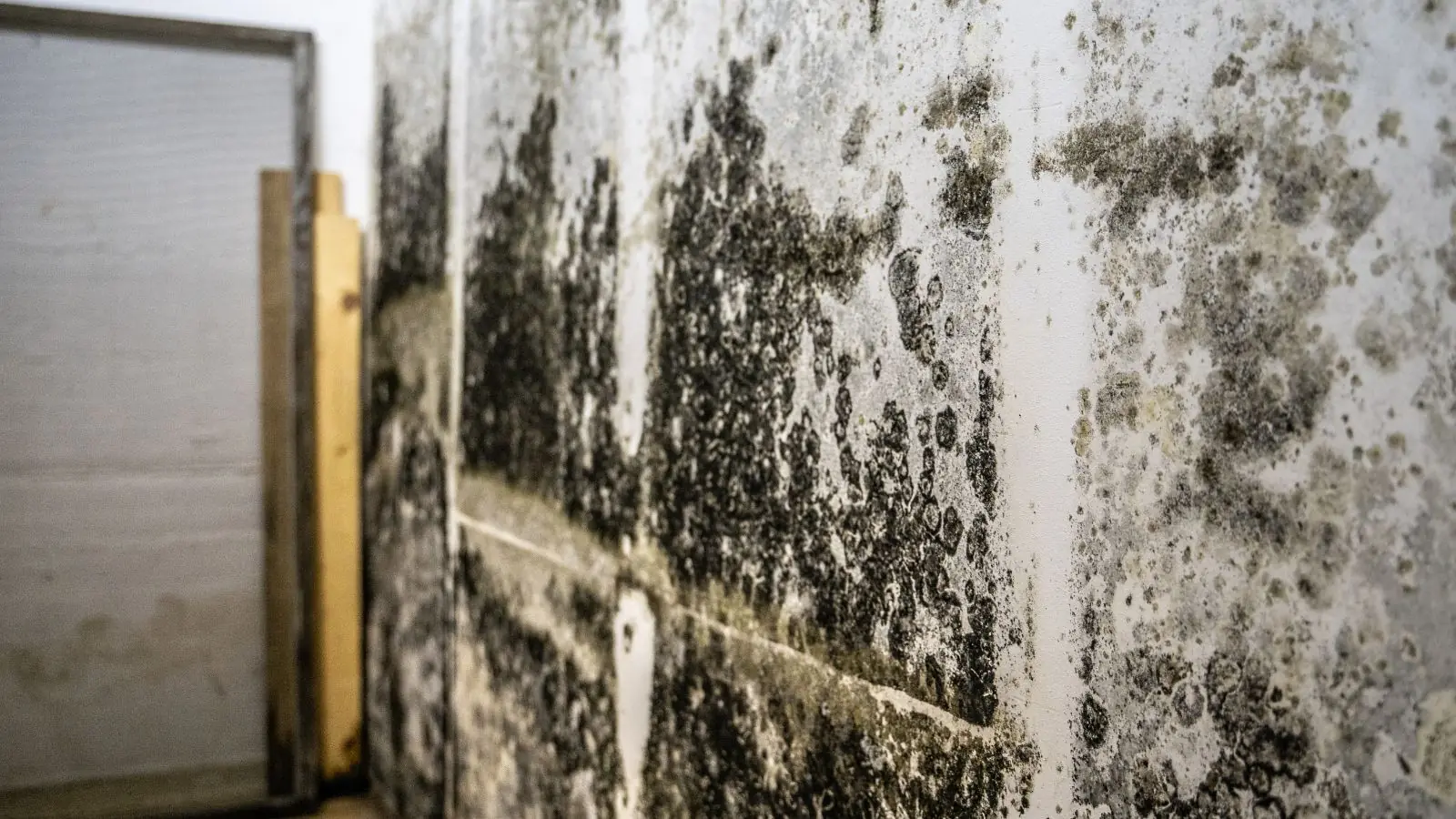
I found black stuff on the wall after a leak. What is it?
People describe it as a musty smell in a closet, black spots behind furniture, fuzzy growth under a sink, or discoloration found when carpet was lifted or a wall was opened during a remodel. That is very often mold, and the work of dealing with it properly is called mold remediation. We do not diagnose health effects. Questions about symptoms belong with your physician.
Mold needs moisture
Mold spores are present in ordinary indoor and outdoor air. They grow when they land on something damp and stay damp. The U.S. EPA advises drying wet materials in 24 to 48 hours to help prevent growth. So every remediation job has two halves: remove what has grown, and fix and dry what fed it.
Gardendale's long humid summers add to this. A leak that might dry out in an arid climate tends to stay wet here, especially in closets, crawl spaces and basements with little air movement.
Where callers find it
- A bathroom ceiling or the ceiling below an upstairs toilet.
- Closets, often next to the air handler.
- Behind furniture on an outside wall.
- Under carpet that was lifted.
- Inside walls opened during a remodel.
- Under kitchen and bathroom sinks.
- Finished basements after seepage.
How remediation is done
The published reference is the ANSI/IICRC S520 standard for professional mold remediation. Ask any company whether its crews work to it.
- Assessment. A visual inspection and moisture readings to find the extent and the water source.
- Containment. Plastic sheeting and negative air pressure keep spores from spreading to clean rooms.
- Air filtration. HEPA air scrubbers run during the work.
- Removal. Drywall, insulation, carpet and other porous materials with growth are cut out and bagged. Mold in porous material is removed, not painted over.
- Cleaning. Framing and hard surfaces are HEPA vacuumed and wiped or sanded clean.
- Drying. The area is dried to normal moisture readings.
- Rebuild. New materials go in after the area passes inspection.
Mold testing, inspection and clearance
Many callers ask for testing first. If you can see mold, a lab test usually is not needed to know it should be removed. Testing is useful when there is a smell with nothing visible, or when someone needs written confirmation.
Clearance testing, done after the work, is carried out by an independent assessor who is separate from the company that did the remediation. That separation is what gives the result value.
Mold and a home sale
Buyers' inspectors flag mold, and some lenders will not fund until it is handled. If you are in that position, get the scope in writing, keep the remediation report, and ask the buyer's lender what documentation they accept. We can describe the work done. We cannot promise what a lender or buyer will accept.
Alabama rules
The Alabama Department of Public Health has stated that Alabama does not license mold remediation services or maintain a list of approved remediators. That makes the standard a company follows, and the detail in its written scope, your main ways to compare.
Small patch or professional job?
| Situation | Reasonable approach |
|---|---|
| --- | --- |
| Surface mildew on tile or a tub surround | Household cleaning |
| A small patch on a hard, non-porous surface | Clean it, fix the moisture |
| Growth on drywall, carpet or insulation | Remove the material |
| A large area, HVAC involvement or a sewage source | Professional remediation with containment |
What decides the price
The area affected, the materials involved, the containment needed, access (attics and crawl spaces cost more), drying, and the rebuild set the price. Testing by a third party is separate. Scope and price are explained before work starts.
Mold coverage in homeowners policies is often limited or capped and usually depends on the water damage behind it being a covered loss. Ask your insurer. For a price, call (833) 521-1033.
Mold remediation in Gardendale and nearby towns
We serve the 35071 ZIP code and Mount Olive, Fultondale, Morris and Kimberly. See Mount Olive for that community. Growth under the house is covered with crawl space water damage, and a damp lower level with basement water damage. We never promise mold will not return, because that depends on moisture staying under control.
Safety steps before remediation
- Do not touch, brush or dry-scrape visible growth.
- Do not run fans across a moldy surface or use the HVAC system if growth is near a return.
- Keep the door to the affected room closed until containment is set.