
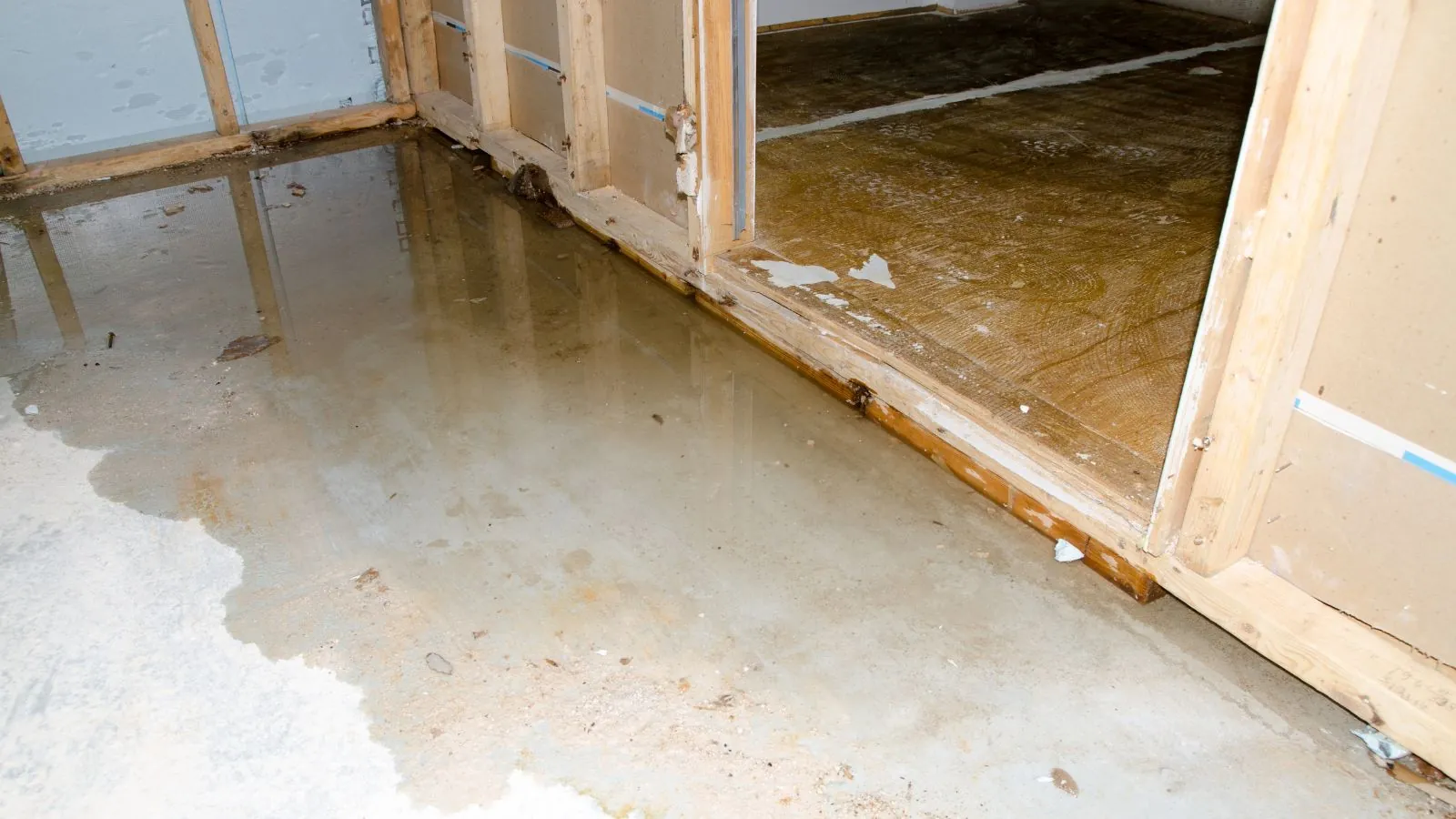
Basement flooding emergency: what to check from the top of the stairs
Look before you go down. Is the water clear or dirty? Does it reach outlets, a freezer, the furnace or the water heater? Is it still rising? If there is any chance of live electricity in the water, stay out and call the power company. If you smell gas, leave the house.
Basements in Gardendale
Gardendale is hilly, and builders here have long used the slope for daylight basements. Local agents describe the Magnolia Ridge homes off Odum Road, built from the mid-1990s to the mid-2000s, as full-brick basement homes. Sloped lots across the city follow the same pattern: garage and basement on the downhill side, main level at the street.
A daylight basement has one or more walls against soil. Rain that soaks the uphill side presses on that wall. That is why callers say water is coming in my basement after a storm even though no pipe has failed.
Where basement water comes from
- Seepage after rain. Through the wall and floor joint, cracks or window wells.
- Sump pump failure. The pump stops during the storm it was installed for.
- Plumbing. A water heater, washing machine or supply line on the lower level.
- Floor drain backup. Dirty water rising from the drain, which is a sewage backup.
- Surface flooding. Water entering through a door or garage, covered under flood damage cleanup.
How a basement is cleaned up and dried
- Standing water is pumped out and the floor extracted.
- Contents are moved, sorted and documented.
- In a finished basement, wet carpet pad, the bottom of the drywall and wet insulation are removed. For flood water, the Alabama Department of Public Health advises removing sheetrock to at least 12 inches above the high-water mark.
- Concrete and framing are cleaned, and disinfected if the water was dirty.
- Dehumidifiers and air movers run until wall plates and studs read dry. Below-grade spaces are cool, so drying often takes longer than upstairs.
Finished and unfinished basements
| Basement type | What is at risk | Typical work |
|---|---|---|
| --- | --- | --- |
| Unfinished, bare concrete | Stored contents, appliances | Pump, clean, dry |
| Partly finished | Framing, some drywall, carpet | Remove wet finishes, dry framing |
| Fully finished living space | Flooring, walls, trim, furniture | Full removal of wet materials, drying, rebuild |
Restoration is not waterproofing
We clean up and dry after water gets in. We do not install drainage systems, replace sump pumps, seal foundation walls or inspect foundations. If your basement takes water in every hard rain, you need a waterproofing or drainage contractor as well, and we will say so. Drying it properly each time still matters, because a damp basement is where musty smells and mold start.
What decides the price
Depth and area, whether the space is finished, the water category, the volume of contents to move, drying days and the rebuild scope set the price. Scope and price are explained before work starts.
Coverage depends on the source. A burst pipe is often covered. Groundwater seepage and outside flooding usually are not under a standard policy, and sump or drain backup often needs an added endorsement. Ask your insurer. For a price on your basement, call (833) 521-1033.
Basement cleanup in Gardendale and nearby
We serve Gardendale 35071, Mount Olive, Fultondale, Morris and Kimberly. Homes on lower ground in Morris are inside the service area. For a house with only a shallow void under the floor, see crawl space water damage, and for musty growth after an old leak, see mold remediation.