
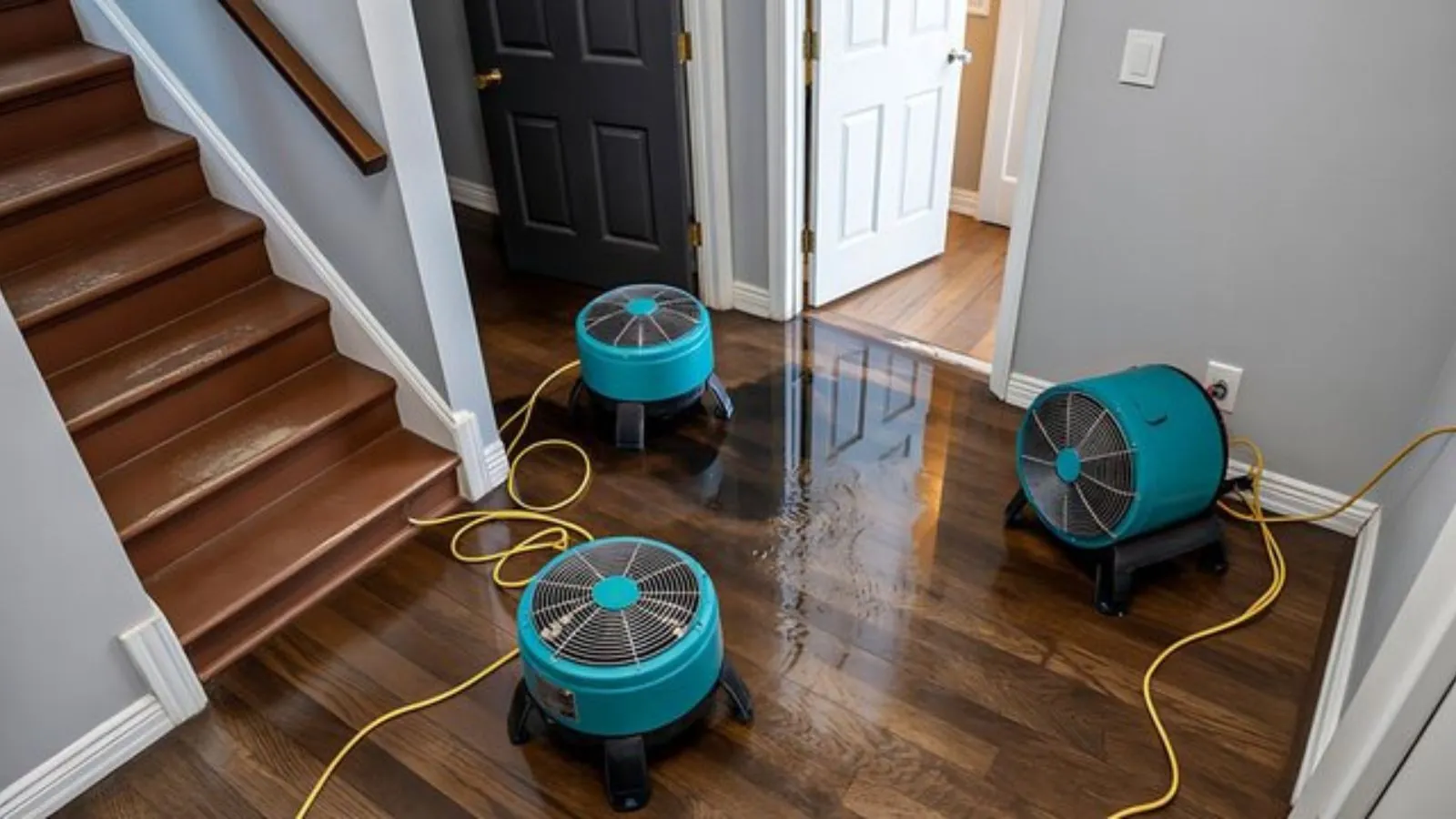
Step 1: make it safe and stop the water
Close the main valve or the fixture valve. Switch off power to wet rooms if the panel is dry and reachable. If water is near electrical equipment, call the power company or 911 before anything else. Safety comes ahead of paperwork.
Step 2: photograph and film everything
Before you move or mop anything, record it. Walk each room with your phone and take wide shots, then close-ups.
- The source: the split pipe, the failed hose, the roof opening.
- The water: depth against a ruler or a wall, and how far it spread.
- Every damaged surface: ceilings, walls, floors, cabinets.
- Belongings: furniture, electronics, clothing, with brand labels where you can.
Note the date and time you found the damage and, if you know it, when it began.
Step 3: report the loss
Call your insurer or agent and open a claim. Have the policy number ready. Ask four questions: what is my deductible, is this cause of loss covered, what emergency work can I authorize now, and what does the adjuster need from me?
Write down the claim number, the name of everyone you speak with and the date of each call.
Step 4: prevent further damage
Policies generally expect you to limit the loss. That means removing standing water and starting drying promptly. Reasonable emergency mitigation is normally part of a covered claim. Keep every receipt, including hardware store purchases and any hotel stay.
Professional mitigation produces records an adjuster can use: a moisture map, daily readings and equipment logs. Our structural drying page explains what those readings mean.
Step 5: make an inventory
List damaged belongings room by room.
| Column | Example |
|---|---|
| --- | --- |
| Item | Sectional sofa |
| Age | About 4 years |
| Where bought | Furniture store name |
| Condition after loss | Base soaked, fabric stained |
| Photo number | IMG 0142 |
Keep ruined items until the adjuster has seen them or tells you photos are enough.
Step 6: get an itemized scope
A scope of work lists each task: extraction, removal of wet materials, equipment and drying days, and the rebuild line by line. The adjuster writes one too. The two are compared and differences are discussed. An itemized scope is far easier to reconcile than a single lump sum.
Permits and records in Gardendale
For a large rebuild, check with the City of Gardendale Inspection Services Department. Its guidance says building permits are required for renovations and some types of repairs, and that significant roof repairs usually need one. Permit costs tied to a covered repair are worth raising with your adjuster.
Addresses outside the city limits follow different offices. Mount Olive is unincorporated, so permits there are a Jefferson County matter. In Kimberly, ask city hall.
Step 7: meet the adjuster
Walk the adjuster through the house. Point out everything, including areas that look dry but tested wet. Share the photos, the inventory and the moisture readings. Ask what happens next and when.
Step 8: review the estimate and payment
Read the insurer's estimate against your contractor's scope. Ask about anything missing. Many policies pay in stages, with some held back until repairs are complete. If you have a mortgage, the lender may be named on the check.
Step 9: keep the file
Keep the claim file, the drying records and the final invoices together. They matter if a related problem appears later and when you sell the house. If the water came from a failed pipe, the cleanup side of the job is described on our burst pipe water damage page.
How long a claim usually takes
Timelines differ by insurer and by the size of the loss. A simple claim with clear cause and good documentation can be settled in a few weeks. Larger losses, disputed causes or missing records take longer. You can shorten it by answering requests quickly, sending documents in one organized batch and keeping a single dated log of every contact.
Common mistakes
- Cleaning up before taking photos.
- Throwing damaged items away too early.
- Waiting days to report the loss.
- Starting permanent repairs before the adjuster has inspected.
- Accepting a lump-sum estimate with no line items.
We cannot say what any insurer will decide. Coverage depends on your policy and the cause of the loss, so ask your insurer.