
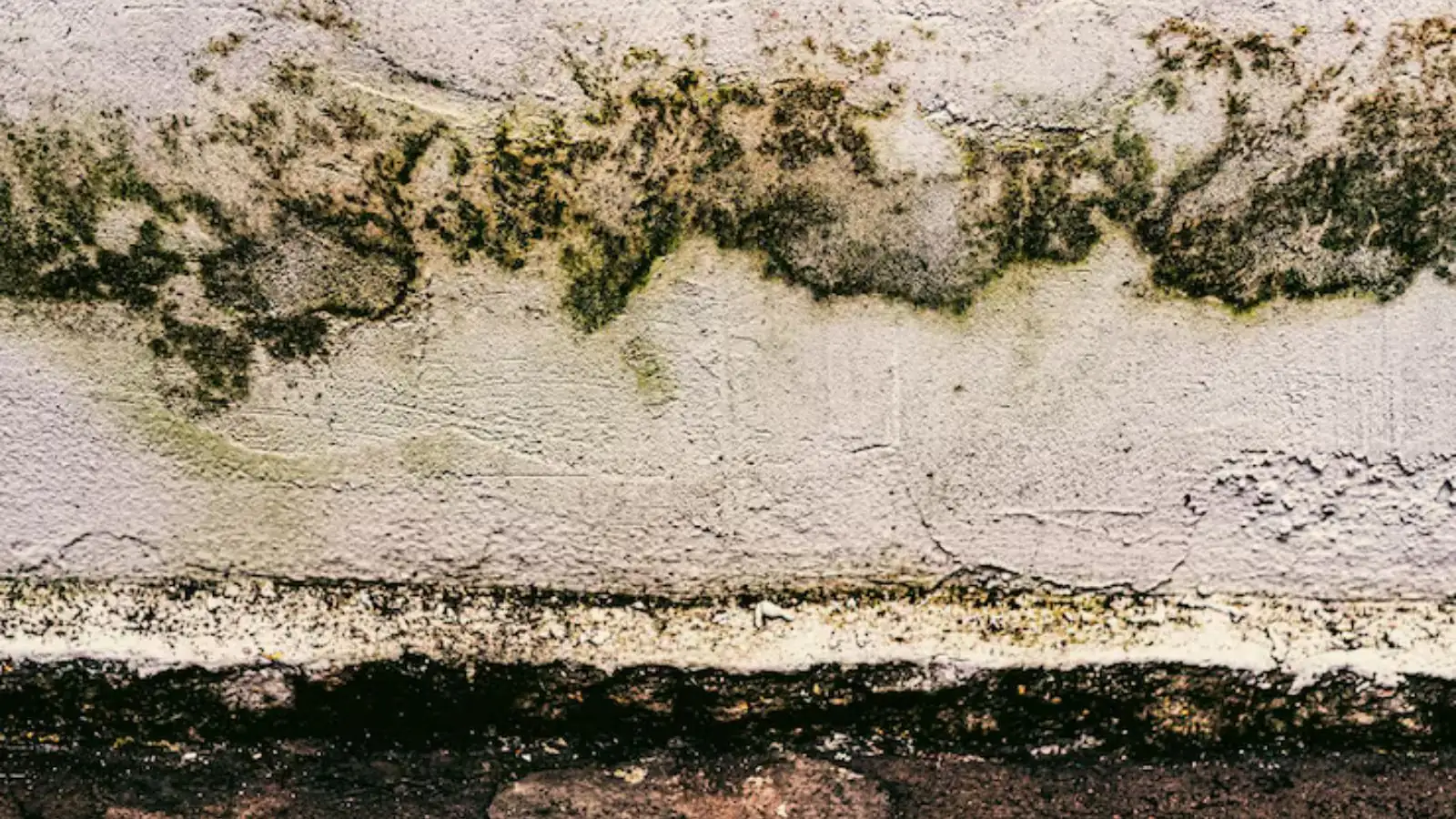
The short version
| Mildew | Mold | |
|---|---|---|
| --- | --- | --- |
| Look | Flat, powdery or downy | Fuzzy, slimy or blotchy |
| Color | White, gray, later yellow or brown | Black, green, blue-green, sometimes orange |
| Where | On surfaces: tile, grout, window sills, plant leaves | In materials: drywall, wood, carpet, insulation |
| Depth | Stays on the surface | Grows into the material |
| Smell | Mild, damp | Stronger, musty or earthy |
| Usual fix | Clean and ventilate | Remove affected porous material, fix moisture |
How to tell by touch and location
Put on a glove and wipe it with a damp cloth. If it comes away easily and the surface underneath is sound, hard and unstained, it was surface mildew. If the stain remains, the surface is soft, or the growth is on drywall, wood or fabric, treat it as mold that has grown in.
Location is the other clue. Growth on a tub surround, a window frame or bathroom grout is normally surface growth caused by condensation. Growth on a wall near the floor, on a ceiling under a bathroom, inside a cabinet or on a closet wall suggests a leak or dampness inside the structure.
Why the distinction matters
Surface growth feeds on soap film, dust and skin oils sitting on a hard material. Remove the film and dry the surface and it is gone. Growth in a porous material feeds on the material itself. Cleaning takes the color off the face and leaves the rest. That is why a patch on drywall that was wiped clean returns in the same place a few weeks later.
What they have in common
Both need moisture. Both mean a surface or material is staying damp for too long. Neither is identified to species by color, and neither needs lab testing before you act. For health questions about either, speak with a physician.
Cleaning surface mildew
- Ventilate the room.
- Wear gloves and eye protection.
- Scrub with detergent and water or a bathroom cleaner.
- Rinse and dry the surface fully.
- Do not mix cleaning products.
Dealing with mold in materials
Small areas on semi-porous surfaces, such as painted trim, can sometimes be cleaned. Mold in drywall, ceiling tile, carpet, pad or insulation is handled by removing the material. The U.S. EPA suggests that areas larger than about 10 square feet are better handled by professionals.
Why Gardendale homes see so much of both
Humidity is the reason. Central Alabama's warm season is long and damp, and the air conditioning in a Gardendale house does double duty as a dehumidifier for months. When a system is oversized, poorly maintained or switched off while the family is away, indoor humidity rises and surface growth appears on the coolest surfaces: window frames, exterior-wall closets and supply vents.
House type adds to it. Hillside homes with basements have cool below-grade walls where humid air condenses. Homes on crawl spaces can draw damp air up from below. Our crawl space water damage page explains how that is checked.
A state fact for anyone hiring help: the Alabama Department of Public Health has said that Alabama does not license mold remediation services. Ask which published standard a company follows.
Prevention that works for both
- Keep indoor relative humidity under about 60 percent. A hygrometer costs little.
- Run bathroom exhaust fans during showers and for 20 minutes after, and confirm they vent outdoors.
- Use the kitchen hood when boiling or simmering.
- Leave closet doors on outside walls open a little in summer.
- Service the air conditioner and keep its drain line clear.
- Fix leaks promptly and dry wet materials in 24 to 48 hours, as the EPA advises.
The white powder on basement walls
One look-alike is worth knowing. A white, chalky crust on concrete or brick in a lower level is often efflorescence, mineral salts left behind as moisture moves through masonry. It crumbles to powder between your fingers and dissolves in water, which mold does not. It is not a growth, but it is a sign that the wall is passing moisture, so check humidity and drainage.
When it is more than a cleaning job
Call for an assessment when growth returns after cleaning, when it is on drywall or carpet, when there is a musty smell with no visible source, or when it followed a leak. Our mold remediation service covers Gardendale and nearby towns including Fultondale and Kimberly. The first step is always finding the moisture.