
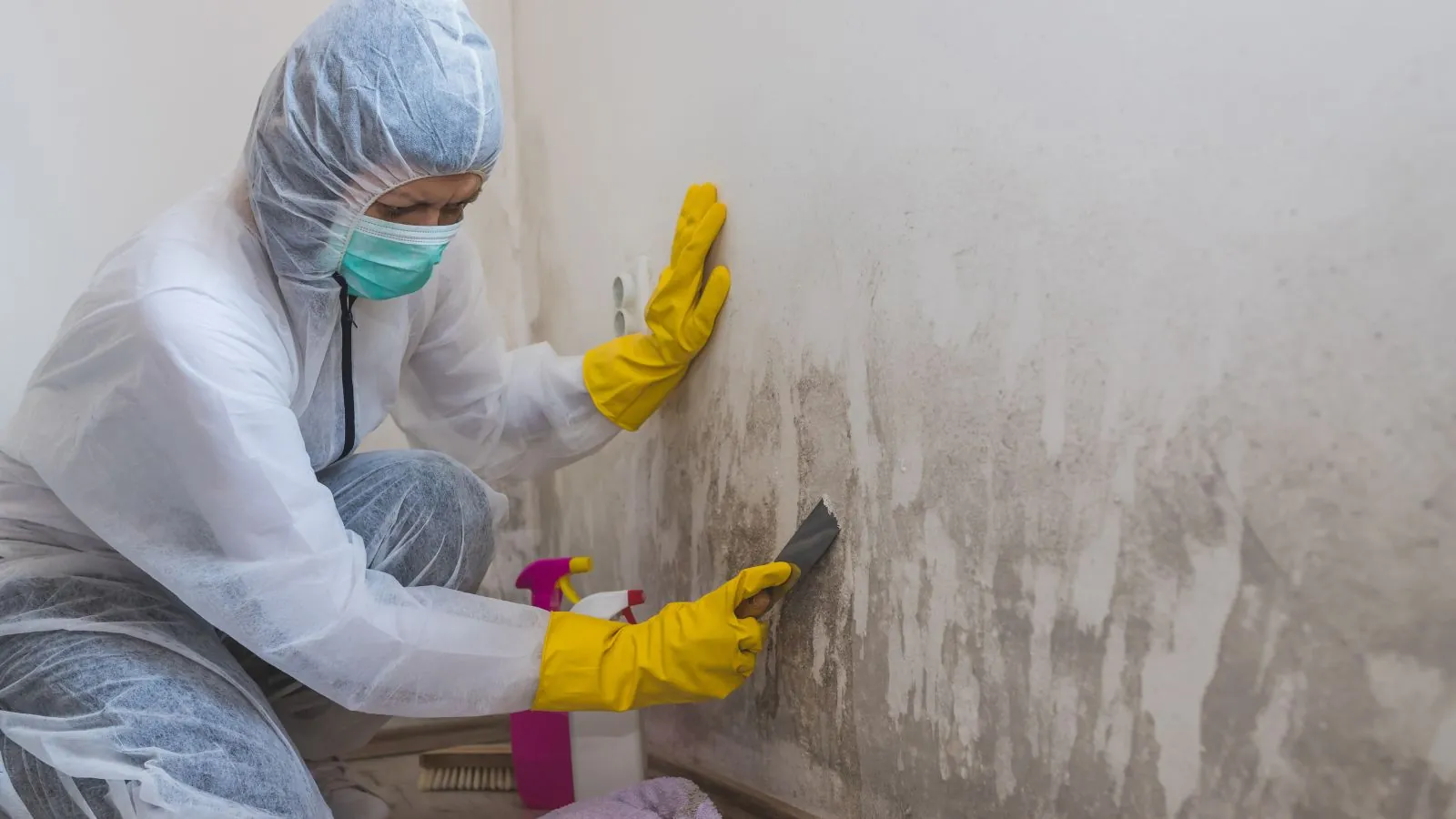
What clearance testing is
Clearance testing, also called post-remediation verification, is an inspection carried out after mold removal to confirm the work succeeded. It normally includes a visual check, moisture readings and often air or surface samples sent to a laboratory. The result is a written report.
Who should do it
Someone independent of the company that did the removal. An assessor who has no stake in the job passing gives a result a buyer, an agent and a lender can rely on. A remediation company grading its own work has an obvious conflict.
One caller in our regional call records asked specifically about independent clearance testing for that reason. It is the right question.
What the assessor checks
- Visual inspection. No visible mold, dust or debris in the work area.
- Moisture. Materials read dry, and the water source has been corrected.
- Containment. For larger jobs, the check is usually made before the plastic barriers come down.
- Samples. Air samples from the work area are compared with an outdoor sample and sometimes another indoor area. Surface samples may be taken from cleaned framing.
What passing means
There is no single government number for an acceptable indoor mold level. The U.S. EPA has not set limits for airborne mold. Assessors generally look for indoor spore types and counts that are similar to or lower than outdoors, with no unusual concentration of moisture-loving species. Each assessor states the criteria used in the report.
The usual sequence in a sale
| Stage | Who | What happens |
|---|---|---|
| --- | --- | --- |
| Discovery | Buyer's home inspector | Notes visible mold or moisture |
| Assessment | Independent mold assessor, if requested | Defines the extent and writes a protocol |
| Remediation | Remediation company | Contains, removes, cleans, dries |
| Clearance | Independent assessor | Inspects, samples, issues a report |
| Rebuild | Contractor | Replaces drywall and finishes |
| Closing | Buyer, seller, lender | Documents are reviewed |
On a small job the assessment step is sometimes skipped and the remediation company scopes the work. Clearance should still be independent.
When a lender is involved
Some loans will not fund while a property has an open mold issue. Calls we see describe exactly that: the lender will not issue the loan until the mold is removed. What each lender accepts as proof differs. Ask the lender, through your agent, what documentation it wants before work begins, so the right reports are produced the first time.
We can describe the work performed and provide our scope and records. We cannot promise that any lender, buyer or appraiser will accept them.
Alabama and Gardendale specifics
The Alabama Department of Public Health has stated that Alabama does not license mold remediation services or maintain a list of approved remediators. With no state license to check, a buyer or seller should look at two things: the published standard the company follows, which should be ANSI/IICRC S520, and the independence of whoever does the clearance.
Local housing matters to where mold is found. Gardendale has hillside homes with basements and older homes on crawl spaces, and those lower areas are where inspectors most often flag moisture. If repairs after remediation are substantial, the City of Gardendale Inspection Services Department requires permits for renovations and some types of repairs, so check before rebuilding. Sales in Morris and Mount Olive follow the same logic with different local offices.
For sellers: get ahead of it
If you know about a past leak, have it handled before listing. Have the area checked for moisture, remediate if needed, and keep the file. A seller who can hand over a dated scope, a clearance report and repair invoices removes most of the uncertainty a buyer would otherwise price in.
For buyers: what to ask for
- The cause of the moisture and proof it was fixed.
- The written remediation scope.
- The clearance report with lab results and the assessor's name.
- Any warranty documents from the roofer or plumber who fixed the source.
What clearance does not promise
A passing report describes conditions on the day of the test. Mold needs moisture, and if a leak returns or humidity stays high, growth can return. No test can promise the future. Keeping the source fixed is what protects the result.
The remediation itself
Clearance is the last step. The work before it, containment, removal of affected materials, HEPA cleaning and drying, is described on our mold remediation page. Where the moisture came from a damp lower level, see basement water damage cleanup.