
Step 1: the water meter test
This is the most reliable check and it costs nothing.
- Turn off every tap, appliance and irrigation zone. Make sure no toilet is refilling and the ice maker is not cycling.
- Find the water meter, usually in a ground box near the street.
- Look for the leak indicator, a small triangle or star that spins when water flows. If it is moving with everything off, water is going somewhere.
- If there is no indicator, write down the reading, wait 30 to 60 minutes without using water, and read it again.
A changed reading means a leak on your side of the meter.
Step 2: inside or outside?
Close the main shut-off where the line enters the house and repeat the meter test. If the meter still moves, the leak is in the buried service line between the meter and the house. If it stops, the leak is inside.
Step 3: check the toilets
Toilets are the most common silent leak. Put a few drops of food coloring in the tank and wait 15 minutes without flushing. Color in the bowl means the flapper is leaking. It is a cheap repair that can waste a great deal of water.
Step 4: look and listen
Walk the house when it is quiet.
- Under every sink: dampness, staining, swollen cabinet floors.
- Around the water heater: rust trails, a damp pan.
- Behind the washing machine and refrigerator.
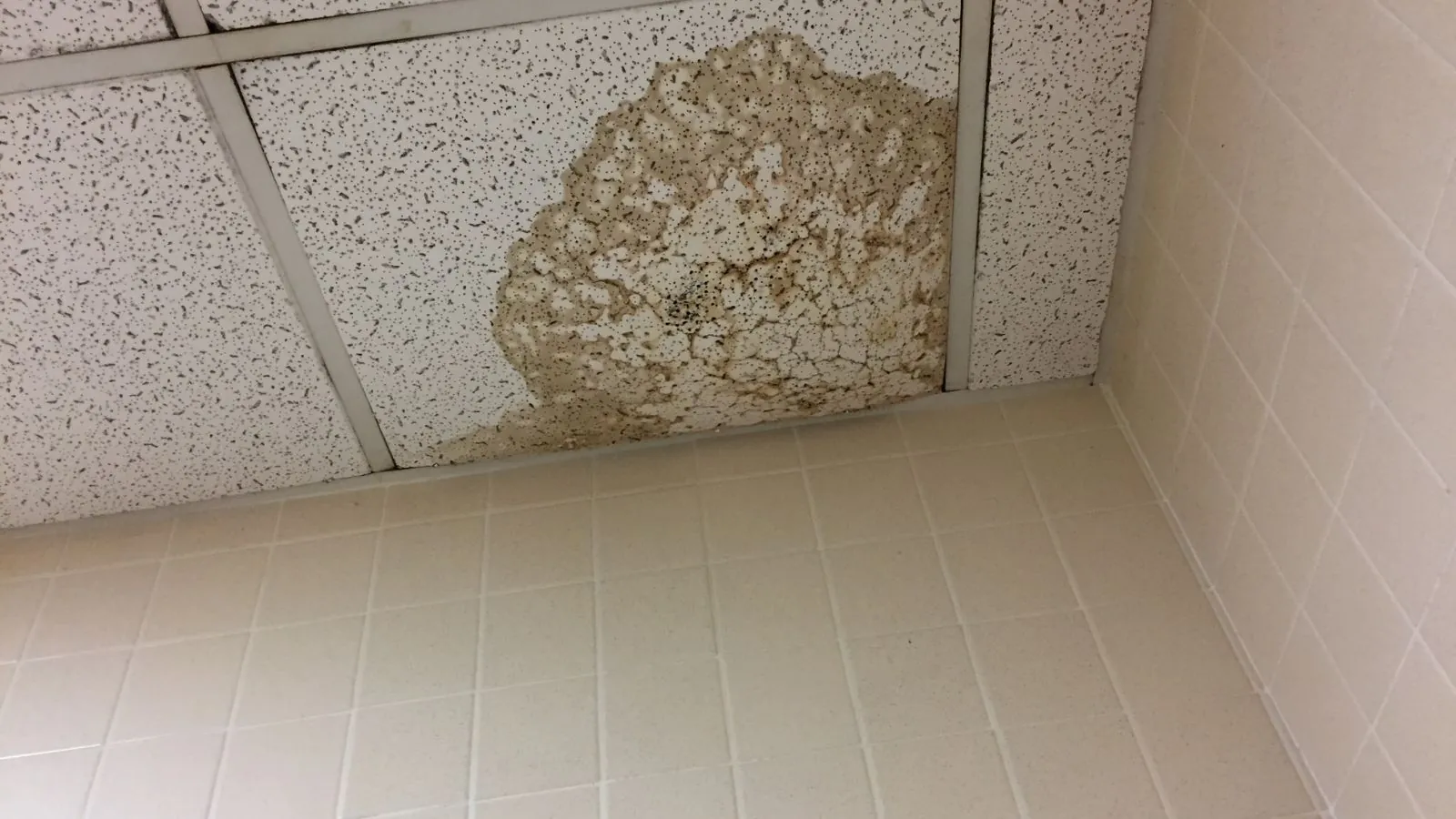
- Ceilings below bathrooms: stains, sagging, bubbled paint.
- Walls: discoloration, peeling paint, warped baseboards.
- Floors: warm spots, soft spots, lifted edges, cupped boards.
- Listen for hissing or dripping inside walls.
Step 5: read your water bill
Compare this bill with the same month last year. A jump with no change in household habits is a strong sign. Many utilities show usage history on the bill. Ask your water utility whether it offers a leak adjustment once a repair is documented.
Signs by location
| What you notice | Where the leak may be |
|---|---|
| --- | --- |
| Meter moves with the house valve closed | Service line in the yard |
| Soggy patch or greener grass strip | Service line or irrigation |
| Warm or damp floor on a slab | Line under the slab |
| Musty smell from floor vents | Crawl space |
| Stain on a ceiling under a bathroom | Drain, supply or shower pan above |
| Mold on a closet wall near the air handler | Condensate drain |
Tools that help
A basic pin moisture meter is inexpensive and tells you whether a suspect spot is wet. Professionals add thermal imaging cameras, which show cooler damp areas behind surfaces, and acoustic equipment that locates pressurized leaks by sound.
Hidden leaks in Gardendale houses
Where a leak hides depends on how the house is built, and Gardendale has every type. Slab-built garden homes hide leaks under flooring. Hillside basement homes hide them in a finished lower-level ceiling. Older homes on crawl spaces drip where nobody goes. Check the level below any plumbing, not just the room it serves.
Weather matters as well. National Weather Service records for the Birmingham area put the average last freeze around March 25. A pipe weakened in a winter cold snap may begin to weep weeks later, so a spring jump in the water bill is worth a meter test.
On larger lots, such as those in Mount Olive, the service line from the meter to the house can be long, and a leak in it may never surface. The same is true on deep lots in Morris.
Who to call
A plumber or leak detection company finds and repairs the leak. A restoration company deals with what the water did: mapping the wet area, drying it and repairing damaged materials. For a suspected line under concrete, our slab leak water damage page explains how the two trades work together. Once the leak is fixed, structural drying removes the moisture left behind.
Do not stop at the repair
Fixing the pipe ends the leak. It does not dry the wall, the subfloor or the insulation. Materials that stayed damp for weeks may already be growing mold, and they will not dry by themselves inside a closed cavity. Have the area measured after the repair. If the readings are dry, you are done. If not, dry it now.
Keep a record
Photograph the meter test, the leak and the repair. Keep the plumber's invoice. If the damage is large enough for an insurance claim, the date you found it and the cause will matter. Ask your insurer how your policy treats hidden leaks.