
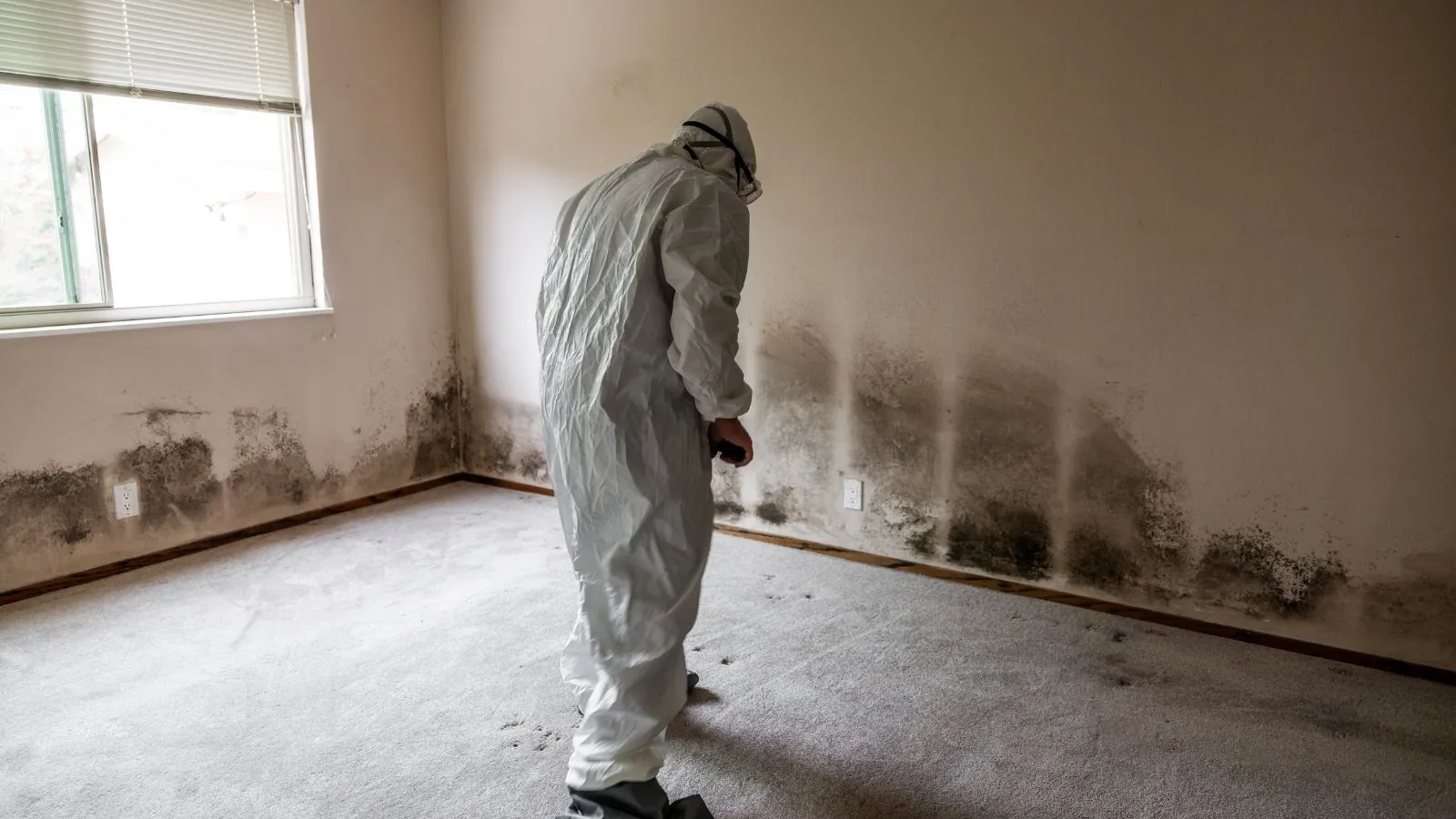
First, what black mold is and is not
Many molds look black or dark green. Color does not tell you the species, and you do not need to know the species to decide what to do. Any visible mold indoors means the same two things: something is damp, and the growth should be removed. We do not give health advice. If anyone in the home has symptoms or a health condition, speak with a physician.
The size rule
The U.S. EPA uses a rough threshold of about 10 square feet, a patch around 3 feet by 3 feet. Below that, a homeowner can usually handle cleanup. Above it, or when mold follows contaminated water or sits in the HVAC system, professional remediation is the safer course.
The surface rule
Size is only half of it. The surface matters as much.
| Surface | Can it be cleaned? |
|---|---|
| --- | --- |
| Tile, glass, metal, sealed countertops | Yes |
| Painted wood trim, sealed concrete | Usually |
| Drywall, ceiling tile | No. Cut out and replace |
| Carpet, pad, insulation | No. Remove |
| Unfinished wood framing | Cleaned by sanding or HEPA vacuuming, by a professional if widespread |
Mold on drywall grows into the paper. Wiping it removes the color from the face and leaves the growth inside.
What you need
- An N95 respirator, rubber gloves and goggles without vent holes.
- Detergent and water in a bucket or spray bottle.
- Disposable rags or paper towels and heavy trash bags.
- A fan in a window blowing out, if weather allows.
How to clean a small patch on a hard surface
- Fix the moisture first. If the leak or condensation continues, the mold returns.
- Put on the respirator, gloves and goggles.
- Do not dry-brush or scrape. That puts spores in the air. Wet the area lightly.
- Scrub with detergent and water.
- Wipe clean with fresh rags and bag them.
- Dry the surface completely.
- Wash your clothes separately afterward.
About bleach
Bleach is not required. The EPA does not recommend it as a routine practice for mold cleanup. On non-porous surfaces it can disinfect, but on porous ones it mostly removes color. Never mix bleach with ammonia or other cleaners. The fumes are dangerous.
Mold in Gardendale homes
Gardendale summers are long and humid, and that outside air is what a house has to resist for months. Bathrooms without a working exhaust fan, closets on outside walls and basements on hillside lots are the usual places for growth.
One state fact is worth knowing. The Alabama Department of Public Health has stated that Alabama does not license mold remediation services or keep a list of approved remediators. If you hire help, ask which standard the company follows. ANSI/IICRC S520 is the published one. The department also suggests contacting your county health department for more information.
Mistakes that make it worse
- Scrubbing dry mold, which sends spores into the air.
- Running a fan across a moldy wall before it is cleaned.
- Using a regular household vacuum, which blows fine particles back out.
- Spraying and walking away without wiping the growth off.
- Cleaning the visible patch and ignoring the damp source behind it.
- Carrying moldy materials through the house unbagged.
Each of these spreads the problem to rooms that were clean. Slow, damp, contained work is what keeps a small job small.
When to stop and call someone
- The patch is bigger than about 10 square feet.
- It is on drywall, carpet or insulation.
- It keeps returning after cleaning.
- There is a musty smell but nothing visible, which suggests growth inside a wall or under flooring.
- It followed a sewage backup or outside flood water.
- It is in or near the air handler or ducts.
Our mold remediation service handles those cases with containment and removal. Where the cause is ongoing dampness under the house, see the crawl space water damage page. We serve Gardendale and nearby towns including Mount Olive and Fultondale.
Keeping it from coming back
Mold needs moisture. Run bathroom fans during and after showers, keep the air conditioning maintained, fix leaks quickly and keep indoor humidity under about 60 percent. No one can honestly promise mold will never return. What can be said is that it does not grow on dry materials.