
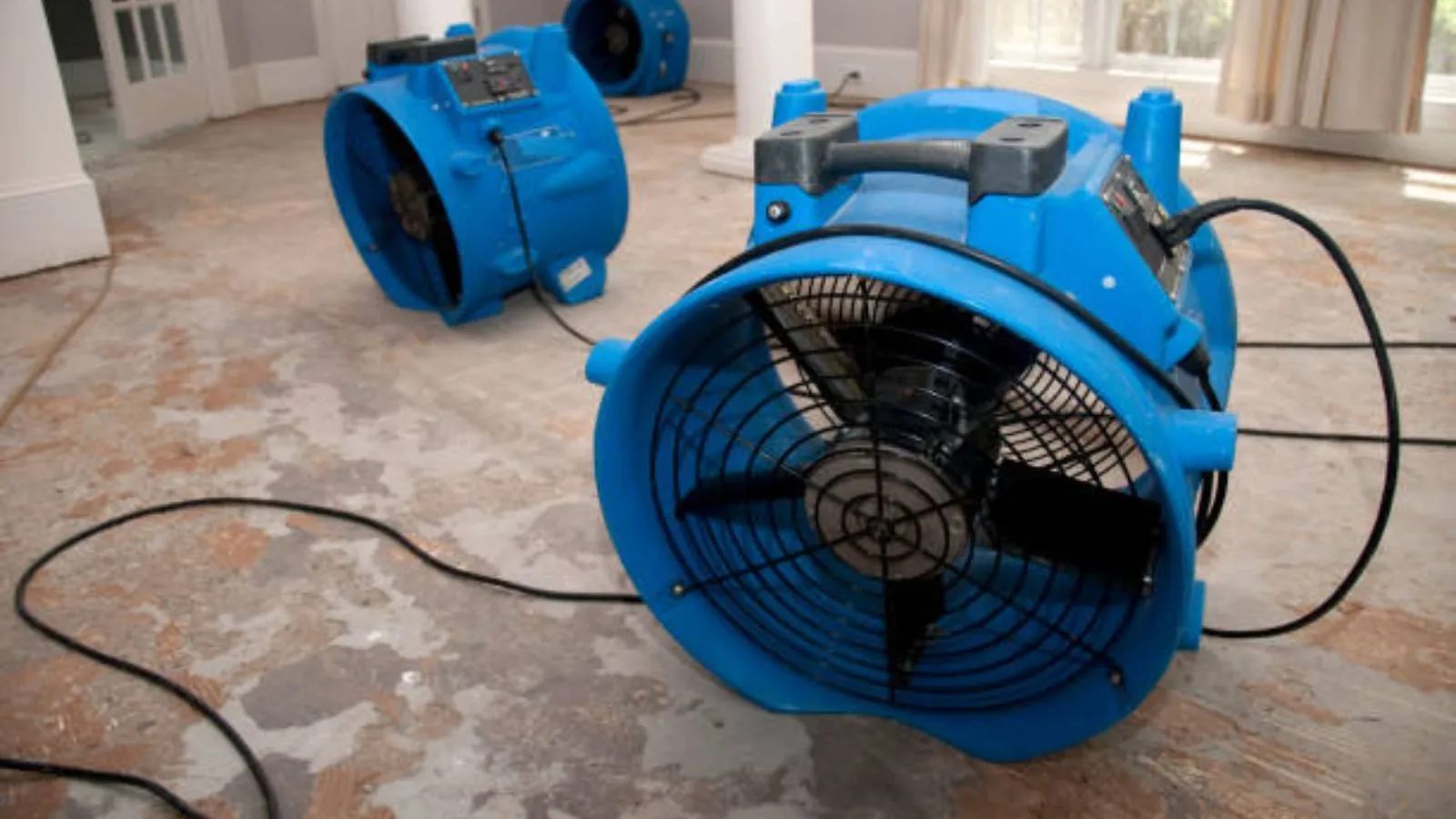
Typical drying times by material
| Material | Typical drying time with equipment |
|---|---|
| --- | --- |
| Carpet, after pad removal | 1 to 3 days |
| Drywall, clean water, dried in place | 3 to 5 days |
| Wood framing and wall plates | 3 to 7 days |
| Plywood or OSB subfloor | 4 to 7 days |
| Solid hardwood flooring | 7 to 14 days or more |
| Concrete slab | 1 to 3 weeks before moisture-sensitive flooring |
| Plaster walls | 1 to 2 weeks |
These are ranges from ordinary jobs, not promises. Each house is measured, and the readings decide.
Why surfaces fool you
A wall can feel dry to the hand in a day. Inside, the insulation and the bottom plate may still be wet. Touch tells you about the surface only. A moisture meter tells you about the material. Drying is complete when affected materials read the same as the same materials in a part of the house that never got wet.
What makes drying faster
- Early extraction. Every gallon pumped out is a gallon that does not have to evaporate.
- Removing what holds water. Carpet pad and soaked insulation dry slowly and keep everything near them wet.
- Air movement across wet surfaces. Air movers lift moisture off materials.
- Dehumidification. The moisture has to go somewhere. A dehumidifier takes it out of the air.
- Warmth. Warm air holds more moisture. A house kept around 70 to 80 degrees dries faster than a cold one.
What makes drying slower
- Water that sat for days before anyone found it.
- Dense or layered materials: hardwood over plywood, tile over backer board, double drywall.
- Closed cavities with no airflow, such as under cabinets.
- Open windows on a humid day.
- Equipment switched off at night.
Drying in Gardendale's climate
Humidity is the local factor. From late spring to early fall, outdoor air in north Jefferson County carries a lot of moisture. Opening the windows to air the house out feels sensible and usually works against you, because it brings in air wetter than what the dehumidifier is producing. During drying, keep the house closed and the air conditioning running.
Winter brings the opposite issue. National Weather Service records for the Birmingham area put the average first freeze around November 9 and the average last freeze around March 25. Cold air slows evaporation and standard dehumidifiers lose efficiency, so a house being dried after a winter pipe break needs the heat left on. That applies equally in Mount Olive and Kimberly.
Can you dry it yourself?
For a small clean spill on a hard floor, yes. Towels, a wet vacuum, fans and the air conditioning will do it. For anything that reached drywall, ran under flooring or soaked carpet pad, household fans dry the surface and leave the inside wet. That hidden moisture is where problems start.
The mold clock
The U.S. EPA advises drying wet materials in 24 to 48 hours to help prevent mold growth. That does not mean a house must be fully dry in two days. It means drying has to be under way, with humidity dropping and materials losing moisture. A job that starts on day one and finishes on day five is normal. A wet wall ignored for a week is where growth begins.
How professionals track progress
On day one the wet area is mapped and a dry standard is recorded. Readings are taken on each following visit and written in a log. Equipment is moved or removed as areas reach the standard. You are entitled to see that log, and it is useful for an insurance claim. Our structural drying page describes the equipment, and water extraction is the step that comes before it.
What happens if drying stops early
Equipment pulled a day or two too soon is a common cause of later trouble. The surface is dry, the room looks finished, and the wall plate or subfloor is still above its dry standard. Weeks later a musty smell appears or new flooring begins to lift. The fix then costs more than the extra days of drying would have. If you are told the job is done, ask for the final readings beside the dry standard.
Living in the house during drying
It is noisy and warm. Air movers hum, dehumidifiers run day and night, and cords cross the floor. Most families stay. Keep the equipment running, keep doors and windows shut, and leave the thermostat where the technician set it.