
The timeline
| Time after wetting | What is typically happening |
|---|---|
| --- | --- |
| 0 to 24 hours | Materials absorb water. Spores already present on surfaces begin to take up moisture |
| 24 to 48 hours | Germination can begin on damp paper, wood and fabric |
| 3 to 7 days | Growth spreads. A musty odor may appear before anything is visible |
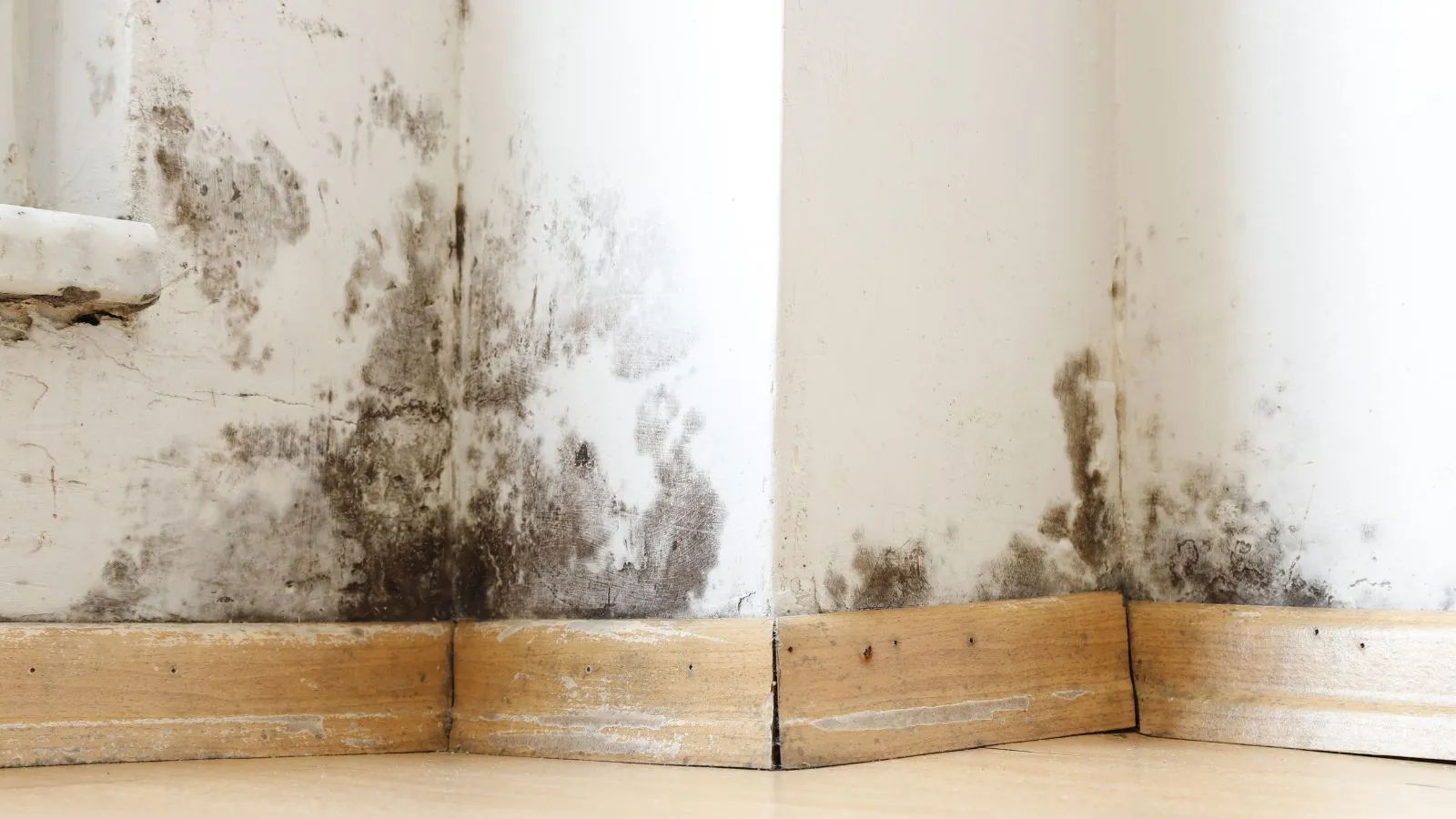
| 1 to 3 weeks | Visible colonies, often as spots or fuzzy patches |
| Beyond 3 weeks | Established growth, spreading to nearby damp materials |
This is a general pattern, and real houses vary. The first two rows are why the U.S. EPA advises drying wet materials in 24 to 48 hours to help prevent mold growth.
What mold needs
Four things: spores, food, a suitable temperature and moisture. Spores are in normal indoor and outdoor air. Food is nearly anything organic, including the paper on drywall, wood, carpet backing, dust and fabric. Indoor temperatures suit it well. That leaves moisture as the one factor a homeowner can control, and it is the whole basis of prevention.
Why some materials grow mold faster
- Drywall. The paper facing is ideal food and wicks water upward. Growth often starts on the hidden back side.
- Carpet pad. Holds water and sits in the dark.
- Insulation facing and dust. Paper-faced batts and dusty cavities support growth.
- Solid wood. Slower, but will grow mold if kept damp.
- Tile, metal, glass. Do not feed mold, though dirt on them can.
It does not need standing water
High humidity alone can do it. Materials in air that stays above roughly 60 to 70 percent relative humidity take on enough moisture to support growth. That is why a closed-up wet room is at risk even after the puddles are gone, and why dehumidifiers matter as much as extraction.
Why the clock runs fast in Gardendale
Climate is the local factor. Gardendale has long, warm, humid summers, which means a wet house here is already at a temperature and humidity mold likes. In a dry climate an open window helps. Here, outdoor air in summer often adds moisture.
Rain can arrive in large amounts. The National Weather Service recorded five to seven inches in and around Jefferson and Shelby counties during one storm system in 2021. After rain like that, basements and crawl spaces across north Jefferson County stay damp for days, including in Fultondale and Mount Olive.
After flooding, the Alabama Department of Public Health advises removing sheetrock to at least 12 inches above the high-water mark. The department also notes that Alabama does not license mold remediation services, so ask any company which standard it follows.
Does cold weather stop it?
Cold slows mold but does not end the risk. Growth is slower in an unheated house in January than in July, yet a heated home stays in the comfortable range for mold all year. A winter leak inside a warm wall cavity follows nearly the same timeline as a summer one.
What to do in the first 48 hours
- Stop the water source.
- Remove standing water. See water extraction.
- Take out soaked carpet pad and anything that will not dry quickly.
- Get air moving and a dehumidifier running.
- Keep the air conditioning on and the house closed in humid weather.
- Check hidden spots: inside cabinets, behind baseboards, the level below.
Past 48 hours: is it too late?
No. The window describes when growth can begin, not when a house is lost. Materials that are dried on day three or four often show no growth at all. What changes is the checking. After a few days, wall cavities and the backs of baseboards should be inspected, not assumed clean.
Signs growth has started
- A musty or earthy smell, especially on entering a closed room.
- Spots on walls, ceilings or the underside of furniture.
- Baseboards or drywall discoloring from the bottom up.
- Staining returning through fresh paint.
We do not diagnose health effects. If someone in the house feels unwell, that is a question for a physician.
If mold has already grown
Small patches on hard surfaces can be cleaned. Growth in drywall, carpet or insulation means that material comes out, under containment if the area is large. Our mold remediation page describes the process, which follows the ANSI/IICRC S520 standard. Nobody can promise mold will not return, because that depends on moisture staying under control afterward.